Posted in Articles, Blog Touring, Guest Posts

Kate Moretti – The Boom of Women Writing Crime Fiction

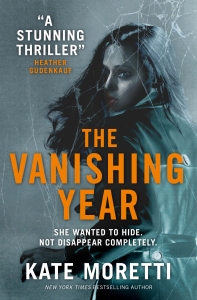
vanishing-year-fina_finalZoe Whittaker appears to have a charmed life. Newly married to a rich and attentive man, she has the best of everything. But five years ago, Zoe’s life was in danger. Because back then, Zoe wasn’t Zoe at all. When an attempt is made on her life, Zoe fears that her past has caught up with her. But who can she ask for help when even her own husband doesn’t know her real name? Zoe must decide who she can trust before she, whoever she is, vanishes completely…

Today, as part of her blog tour to support the release of The Vanishing Year, Kate Moretti talks to LifeOfCri.me about the boom of women writing crime fiction.


The Boom of Women Writing Crime Fiction

“Are you ever afraid what will happen when the trend dies?” Someone asked me the other day. This person was a writer, a friend. She meant it in a kind way. I write “domestic suspense”, which I suppose has seen a boom since Gone Girl, although many of us female suspense writers have abounding theories as to why now?

My latest novel, The Vanishing Year released on September 27. It is, at it’s heart, a woman in peril story. My hope is that she starts out wobbly and finishes strong. I hope she saves herself. That was my intent, but of course, the book belongs to the reader now, and no two readers think alike.

I never set out to write to a trend, of course. No one really does that, at least not anyone successful. I fell in love with these female written, female led suspense novels. Where yes, a crime occurred, right in our own little backyard barbeque. These novels cut right to the center of life – husbands and children, friendships and families – these are the stories that are happening, right now to all of us. And then, suddenly, we’re in life-threatening danger.

There’s something so enticing about that idea. Our own streets are dangerous, our neighbors aren’t who we think they are, our friendships – seemingly so sure—are as wobbly as a dinghy, and on as solid ground.

“What makes you think it’s a trend?” I can’t help but ask this. Raymond Chandler, possibly the godfather of the hardboiled detective, certainly never spawned a trend when authors like Michael Connelly, Lee Childs, James Lee Burke and Dennis Lehane followed in his wake. It just existed as a new take on genre and has persisted the past seventy-five years. And yet, women are asked (repeatedly, I’ll add), why the trend?

I resist the idea that women writing suspense will be a fading fad. Men have clearly been doing it, well and successfully, for decades. Women bring a certain emotional connection to mystery and suspense novels that may be lacking, or at least not the focus, in a plot driven noir.

There’s room for both of us, men and women. Don’t get me wrong, I love the hardboiled detective. It’s possibly my second favorite kind of story to read.

I’ve recently become obsessed with Tana French. Obsessed. Her novels are written from female and male points of view, but her take on the male detective is fascinating to me. Compared to Connelly’s Bosch or Child’s Reacher, she gets so deep into the protagonists head, her novels are so dense, so thick I feel like I’ve lived with these people. I’ve never had book hangovers like this. Her world building is exceptional.

I refuse to succumb to the thinking that these all-encompassing suspenseful stories are a passing fad. Publishers and media sometimes refer to these books as “The Girl” books, which is almost derisive. It attempts to box up and label what is slowly becoming a global addiction: female led crime fiction.

I, for one, hope to see more of these stories: where it’s not just men who expose the cruelty and evil of society. Where men have always carried guns and driven fast cars, women are now putting a finer point on our capacity for violence. The crime fiction now is more nuanced and more clever, the bad guys are more subtle, and the heroes are more flawed. The cracks are exposed and the stories that live there are unique and extraordinary.
Posted in Articles, Blog Touring, Blogging

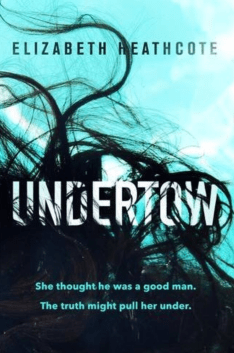
Undertow by Elizabeth Heathcote – Exclusive Extract


The woman’s name was Zena and she was twenty-nine. There was a picture in the paper – she was very good-looking, slim with long glossy black hair, flawless ivory skin, in the photograph she looked like a model. Paula recognised her, had seen her before in the village. Shaun had pointed her out one day – he knew her a bit from when they were young, she’d grown up nearby and then moved away. Shaun had said hello to her, but she’d blanked him. He’d been stung by that, she could tell, but he’d laughed it off.

It turned out she and her partner had been living around the corner in Shell Road. The paper said that they’d bought it as a weekend place just a few months ago. Paula could see the house from her garden – an old lady called Iris used to live there and after she died it was empty for a while. Paula knew someone had moved in, but she hadn’t seen them yet, she didn’t realise it was the same woman. They were down for the bank holiday. The woman went for a swim late afternoon on the Monday and didn’t come back. The paper said she had swum from the stretch of the beach next to the bungalow, which wasn’t safe – she should have known that, growing up around there. It wasn’t protected for swimming – jet skis and boats used that area, plus the tide was strong and there were big waves, an undertow that could be dangerous.

There was lots of talk in the village, about the dead woman, theories about how she had died, rumours that it wasn’t just a simple case of drowning, that there was more to it than that. Shaun said it was all nonsense and Paula was happy to agree with him. St Jude’s was a gossipy place, everyone liked to have an opinion.

Someone who knew the dead woman from way back said she was a strong swimmer, that she knew what she was doing. Sometimes, Shaun said, it isn’t enough.


My husband’s lover. They said her death was a tragic accident. And I believed them . . . until now.

Carmen is happily married to Tom, a successful London lawyer and divorcé with three children. She is content to absorb the stresses of being a stepmother to teenagers and the stain of ‘second wife’. She knows she’ll always live in the shadow of another woman – not Tom’s first wife Laura, who is resolutely polite and determinedly respectable, but the lover that ended his first marriage: Zena. Zena who was shockingly beautiful. Zena who drowned swimming late one night.

But Carmen can overlook her husband’s dead mistress . . . until she starts to suspect that he might have been the person who killed her.

Posted in Articles, Blog Touring, Guest Posts

The Dos and Don’ts of Crime Writing by G J Minett

The Hidden LegacyGJ Minett is the author of The Hidden Legacy & Lie In Wait, as part of his blog tour to celebrate today’s paperback release of The Hidden Legacy, he’s taken time from his busy schedule to talk to LifeOfCri.me about his personal Dos and Don’ts of writing crime fiction.


Dos and Don’ts of Crime Writing


GrahamSo … let’s get all the self-effacing disclaimers out of the way first, shall we?

I’m not entirely sure that a body of work comprising two eBooks and one paperback qualifies me as an expert on how best to go about producing a crime novel. I’m sure I would bristle at the idea of having to conform to someone else’s notions as to what constitutes good practice, so I’m not about to pontificate here. Feel free, as they say, to try this at home but please don’t feel under any obligation to wear the strait jacket. The right way is what best suits you.

I’ll share with you three examples of what works for me, with no significance at all attached to the order in which they appear.

Treat your readers with a bit of respect

I’m a reader. Part of the fun for me, in reading a crime novel, is working things out for myself, following clues, weeding out red herrings and trying to anticipate where the author is trying to take me. I don’t need to have my hand held. I certainly don’t want an idiot guide thrust into my hand. But equally, if I’m going to invest a great deal of time and mental energy into reading a 400 page novel, I expect to be able to believe the outcome. I may not see a twist coming, I may miss one or two crucial clues and shake my head when I think back, wondering how I didn’t pick up on them. What I do NOT want though is to be defeated by some startling coincidence or miraculous intervention I could never have foreseen in a million years that leaps out of nowhere and changes everything. Whenever this happens, it’s difficult to avoid the impression that the author has backed her/himself into a corner and not had a clue how to get out of it without resorting to desperate measures. Keep it real. Avoid shortcuts. Work the plot through beforehand and don’t short change the reader by settling for the mediocre.

Show don’t tell

OK … I know. Very MA in Creative Writing. But there’s a reason why this particular mantra is chanted at every writing course you’ll ever attend. It ties in neatly with the previous section because most readers are quite capable of working out for themselves how a character is feeling if they’re given the right visual clues. It is after all how we operate in real life. If I see someone wiping away a tear, I don’t need to be told “I’m feeling sad”. If someone is twisting the cord of a blind around a finger while gazing out of the window or slamming a glass down on the table so that the liquid slops over the side, I can tell what sort of mood we’re dealing with here without any need for some disembodied voice to tell me she’s sad or he’s angry. Why should these visual clues be any less effective in a novel? Some writers are so gifted in the way they allow feelings to seep through without any need for explanation that they add an extra layer of enjoyment to the whole reading experience. Try it next time you feel the urge to have one of your characters explain how she/he is feeling.

Listen to your dialogue

If you wrote a song, you’d probably want to play it and hear what it sounded like. I wonder sometimes how often writers apply the same principle to dialogue because all too often it clunks, for want of a better word. I read a novel recently that was excellent in many respects but whenever the police officers decided to go to the pub for a drink my heart sank because I knew what to expect. What was supposed to pass for male banter sounded more like  cheeky chappie dialogue from 1920s Music Hall minus the boom boom and it simply didn’t ring true.

Dialogue is very important in most novels as a device for ‘nailing’ a character, making sure that she or he comes across as an authentic person you might encounter next time you walk into a bar. If it isn’t quite right, the reader will quickly pick up on any inauthenticity and the spell can be broken just like that.

Try recording your extended passages of dialogue and playing them back or maybe getting friends to read them out to you. Also try recording others when they’re speaking so that you can pick up on any nuances. Not many people string together whole sentences without digression, hesitation, repetition, sudden changes of subject. If you can work some of these subtle differences into the speech patterns of your characters, they will appear more authentic.

As I said at the outset, these three examples matter greatly to me and have helped me enormously. I hope they will be of some use to you too.

And I just know someone is already trawling through my novels right now in search of instances where I haven’t managed to practise what I’ve preached. I’m sure they’ll find them!


Posted in Articles, Blogging

Author resources – a r t E A S T

We all know that in these days of social media, websites, blogs, self-publishing, and marketing, your ‘brand’ can form a big part of your success, and for those of you out there that need help in navigating your way around getting set up, here’s someone who can do that for you.

a r t E A S T   c r e a t i v e

A creative consultancy with a novel idea is launching a pioneering service aimed at ensuring writers enter the marketplace with more than just the write stuff.

From websites to bookmarks, business cards to publicity materials, the new service aims to provide a one-stop shop for writers in need of an innovative marketing identity.

a r t E A S T is run by artist and designer Nicola East and its new scheme, Novel Beginnings, aims to provide new and established authors with total marketing and branding packages – alongside ‘doing the things that most new writers assume are going to be done for them’.

Nicola is the partner of international best-seller David Mark and is using her experience of the publishing world to fill a gap in the market that she identified when David embarked upon his writing career. Nicola, based in Lincolnshire, said: “the world of publishing is quite a scary place to venture into and I believe most people entering it have very little idea of how things work.  When David first secured a book deal we had no idea that he then needed to get a website, or a dedicated Facebook author page, business cards or bespoke pictures of himself looking moody surrounded by books!  We thought that was all done for you, after all, he’d written the book! But no, this is not the case and I soon realised that if he were to have a digital toolbox, I’d need to do it for him as we had limited funds and David is essentially a Luddite! I’ve always loved taking pictures and have a background using computers so, to us, it seemed a logical step that I started to manage this side of David’s career.  I’ve finally set up  a r t E A S T  in order to share the knowledge I’ve gained of the industry with new authors in order to  help them create their own unique brand as well as offering established authors an opportunity to update or reinvent their own image and the tools that go with it.”

Among the services Novel Beginnings will provide are:

  • Website
  • Author Facebook Page
  • Bespoke Photography
  • Individual styling & creative direction
  • Business Cards
  • Bookmarks

However Nicola prefers to discuss your needs/wish list with you as well as your budget and come up with a plan to suit everyone.

Nicola has already received ringing endorsements from publishing giants Hodder and Stoughton.  a r t E A S T has a reputation for forward-thinking marketing ideas and was recently heavily involved in the production of a groundbreaking ‘Murder Map’, detailing the exact locations utilised for scenes in the DS Aector McAvoy novels.

Naomi Berwin, Marketing Manager at Hodder & Stoughton said: “It was an absolutely pleasure working with a r t E A S T on the David Mark Murder Map. From the initial concept to her creative photographic eye to her intrepid journeying round Hull and Humber to find the perfect location shots, Nikki was an integral part of the creation of the site.”

To view some of Nicola’s work, visit:  www.art-east.co.uk

Posted in Articles, Blogging, Guest Posts

From helping fight Crime, To helping write crime

When it comes to authenticity in a novel, it’s all down to research, research, research and at times some expert advice.  Not everyone knows where to look, so today former DCI Stuart Gibbon, is talking to lifeofcri.me about his transition from writing factual police reports into helping write fictional police procedurals.

FROM HELPING FIGHT CRIME TO HELPING WRITE CRIME

GIB1My name is Stuart Gibbon and I’m a former police DCI turned Writing Consultant.

My story began in the early 1980’s when I travelled from my native north-east of England down to London at the ripe old age of 16 to join the Metropolitan Police as a cadet. A couple of years later I passed out (fortunately not literally) from the police training college at Hendon as a fully-fledged Police Constable. For the next 18 years I worked in uniform and CID on the streets of north-west London.

In 2000 I transferred to the East Midlands where my police career continued with promotion through the ranks to Detective Chief Inspector (DCI). As a large part of my police career was spent as a Detective I was able to gather lots of experience in crime investigation and detection. As a Senior Detective I was in charge of Murder and other serious crime cases.

On retiring from the police service in 2012 I still wanted to help people and had always maintained an interest in reading books. I decided to set up GIB Consultancy to offer advice to writers to ensure that their work is not only procedurally accurate but also authentic. I contacted the Crime Writers’ Association and circulated my details where possible. Since then I have been working with a number of writers across a diverse range of topics from standard police procedure, missing persons and Coroner practices to forensic evidence, kidnapping and Murder investigation.

My first written acknowledgement arrived courtesy of Tammy Cohen as a result of my advice for her novel Dying For Christmas published in 2014. I have recently advised C.L. Taylor on her massive hit The Missing and I’m currently working with her on her fourth psychological thriller which is due out next year. Although the majority of requests for advice are from crime writers, I have helped writers of other genres who may wish to include something police-related in their story.

In addition to the advisory service I also talk with Writing Groups and at festivals/conferences on the subject of ‘Murder Investigation’ and the challenges facing a Senior Detective in charge of such cases. The talk/workshop is designed to give writers ideas for their work and to ensure that any procedures are realistic.

My new ‘career’ is every bit as challenging and rewarding as my previous one. It’s great to be able to play a part in helping to produce something which is going to be enjoyed by so many people.

I have a website at http://www.gibconsultancy.co.uk and would welcome any writers who would like any advice or just the odd question or two answering to contact me as I am sure I would be able to help.

The GIB Consultancy

Stuart Gibbon
GIB Consultancy

Posted in Articles, Blog Touring, Guest Posts

Generating Geraldine – Leigh Russell Talks About the Inspiration For Murder Ring

imageimg_2554.png

As part of the blog tour for the latest Geraldine Steel novel ‘Murder Ring’ Leigh Russell talks to LifeOfCri.me about where some of her inspiration came from.


My inspiration for Murder Ring

Inspiration comes from all sorts of places, in various guises. Agatha Christie famously said that the best time for planning a book is while you’re doing the dishes. Even though nowadays most of us have dishwashers, we all know what she meant. I can be sitting at home, or out and about, when an idea occurs to me and off I go. Ideas can come from anywhere. It might be a person I’ve noticed who sparks off a story, or an atmosphere in a strange place, or just a large suitcase, large enough to hide a body…

The inspiration for Murder Ring came about in a slightly unusual way for me, more calculated than in my other books. Usually I’m inspired to write about something that interests me, but this time, ironically, my starting point was  a topic that didn’t interest me at all. In the fourth book of the series, Geraldine Steel moved to London. By the time I started to think about Murder Ring, the eighth in the series, I decided I couldn’t continue setting a detective in North London in the present day without ever mentioning guns. The problem was that not only did I know nothing about guns, they aren’t a topic that inspires me at all. Nevertheless, in the interests of authenticity, I decided to bite the bullet, if you’ll excuse the pun. So tackling the issue of gun crime was a conscious choice, rather than an idea that inspired me.

One of my advisors is a police ballistics expert, but his information was not what interested me the most once I began to look into the subject.  My research led me in a different direction, looking into the kind of people who were likely to be in possession of guns in London. Most of them are not criminal masterminds, but dysfunctional people. Older teenagers in gangs frequently give their firearms to young siblings to look after in order to avoid detection, knowing the children are too young to be prosecuted if found in possession of a gun. It was in the news recently that children as young as ten were among fifteen hundred children held over alleged firearm offences in the UK in the three years to January 2016. Such statistics are worrying, and are only likely to worsen as guns are so readily available.

The more I looked into the subject, the more I realised that while guns themselves don’t interest to me, what they represent fascinates me as a writer of crime fiction. People often use self-defence as an excuse for owning guns, but guns are essentially a means of exerting power. And for a crime writer, villains seeking to control or eliminate their victims is always interesting. So although guns in themselves are merely mechanical instruments of death, introducing them into Murder Ring opened up new possibilities for creating villains. Because what makes guns frightening is not the weapons themselves, but the people who use them.


Posted in Articles, Blog Touring, Guest Posts

David Young On Trabants, Ketwurst and Blue Stranglers

Debut novelist David Young’s first Oberleutnant Karin Muller novel, Stasi Child is out now for Kindle, and here as part of his blog tour, David talks to LifeOfCri.me about a few of those things particularly loved by the East Germans.


imageEast Germany – or more properly, the German Democratic Republic (Deutsche Demokratische Republik in German) – is now a lost world, and many would say that’s for the best, trapped as its citizens were behind the fortified Berlin Wall and the inner German border.

But twenty-five years after the two Germanies reunited (the anniversary was earlier this month), there are still some things from the communist state that its former inhabitants hanker after. It’s spawned a form of nostalgia with its own name – Ostalgie. In my novel Stasi Child there are plenty of references to products and brands which were peculiarly East German. Some were so popular they still survive today.

Cars

My detective, Oberleutnant Karin Müller, and her deputy, Unterleutnant Werner Tilsner, drive around in an unmarked police Wartburg. But the most iconic East German car was the much-maligned Trabant. The Trabi can still occasionally be seen on the streets in eastern Germany today, even though it was made out of a strange product called Duroplast – a mixture of recycled cotton and resin. It had a horribly inefficient two-stroke engine, a top speed of 62 mph, and emitted between five to nine times the pollution levels of even an average 2007-vintage western European car. Nevertheless, they were much sought after, with citizens often on a years-long waiting list, so lucky owners maintained them meticulously. Wartburgs – a step up from the Trabi – were made of steel, and were even exported to the UK. Müller and Tilsner in Stasi Child would probably have driven a Wartburg 353 – nicknamed ‘Farty Hans’ because, like the Trabant, it was a two-stroke with copious exhaust emissions.

Food

In the original draft of Stasi Child, I had Müller eating a Ketwurst – a ketchup wurst (the German name for sausage) bought from an outdoor stand. The Ketwurst was an East German ‘invention’ – developed by the fantastically-titled State Gastronomic Research Centre – to rival the American hot dog. Then I discovered it didn’t come into being until 1977 or ’78, while the novel is set in 74/75. So instead she wards off her hunger with a quarter Broiler. The broiler was simply grilled or fried chicken and an East German fast food staple.

Other famous East German food products include the ones listed by my teenage characters in the second, parallel narrative of Stasi Child. For example, Nudossi (sometimes nicknamed Ost-Nutella) – a hazelnut and chocolate spread which actually has a higher proportion of hazelnuts than its western equivalent and is still produced today (it’s delicious!). Another is Spreewald pickles – pickled gherkins in glass jars produced in a wooded area 100 kms south-east of Berlin, which famously feature in the film Good Bye Lenin! Then there was the GDR’s answer to Coca Cola: Vita Cola, advertised as a ‘carbonated soft drink with fruit and herb flavoring’ and like its more famous western cousin, produced according to a ‘secret recipe’.

There are still restaurants in the eastern part of Germany where you can sample traditional East German dishes. One of them – the restaurant attached to the DDR-museum in Mitte – serves the favourite dish of Müller’s husband, Gottfried, Gebackene Apfelringe (baked apple rings). This features in a particularly harrowing scene in the novel.

Alcoholic Drink

Drinking alcohol was almost a national pastime in East Germany. The GDR’s official youth movement, the FDJ, even had a song about drinking beer. In the mid 1970s – when Stasi Child is set – an East German medical specialist estimated that 5% of adults in the GDR were alcoholics: four times as many as in West Germany. In my opening scene, Müller and Tilsner wake (in Tilsner’s marital bed!) with hangovers after downing too much Blue Strangler the night before. Blue Strangler in the early days of the GDR referred to 40% proof crystal vodka, and got its nickname from the blue label of the bottles (a later version actually branded as Blue Strangler was actually a grain schnapps of lower alcohol content). Although former East German detectives I spoke to insisted there was no drinking on duty or during a case, alcohol was part of daily life. East German women’s magazines even advised a special diet for those wanting to lose weight: the wurst and vodka diet!

Interestingly, when the 1989 protests which led to the dismantling of the Berlin Wall and East Germany began, alcohol consumption slumped to historic lows within a matter of weeks.


Stasi Child by David Young is out now in ebook. The Paperback will follow in February 2016.

Posted in Articles, Blogging

#TeaWithLeigh

12049428_10153151341282844_2841710274308182234_n“The quintessentially British tradition of afternoon tea is usually credited to Anna, 7th Duchess of Bedford in the early 1800’s.”

Or so says the menu of Anna’s tea room, as I peruse its thick, heavy-set and gilded pages trying to make a decision.

You see last month I was a very fortunate (and very smiley) reviewer who was invited by No Exit Press to experience the delights of afternoon tea with accompanying champagne at The Grosvenor House Hotel, Park Lane, London. There were several other reviewers and bloggers there along with Guest of Honour, author of the DI Geraldine Steel and DI Ian Peterson serial thrillers, Leigh Russell.

12038286_1081949831816322_5284549682262082134_n
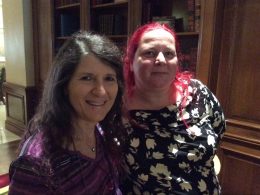
Me with Leigh

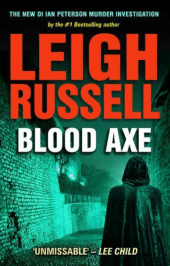
We gathered initially in the Library where I presented Leigh with her very own “Blood Axe” (albeit a plastic one with no blood, although I did provide some red paint) and after a few fun photos

12009766_10153151340587844_8357229209679768100_n
Fellow reviewer Kirstie Long protecting her champagne from Leigh’s new Blood Axe

we were directed to our tables to order.

Tea was the first order of the day, and there were plenty to choose from, however as a person whose preference is “builders brew” that comes mainly from Yorkshire, I think I was a tad over ambitious in my selection, but in the spirit of adventure I had to try their Flowering Red Amaranth tea, just because it sounded so intriguing.image

After tea, some seat shuffling and a few more photo’s we were given a palate cleansing tropical fruit coupe, before being served with finger sandwiches, mini pastries and deliciously sweet desserts, before the final course of warmed plain or raisin scones with a selection of jams and clotted cream. All of which was absolutely gorgeous, and surprisingly more filling than you may think.

12002267_10153151340932844_2488087633072054506_n
Cakes, pastries and sandwiches

For four hours we laughed, ate, drank, (did I mention the champagne?) asked questions, talked books and reading, and Leigh’s upcoming releases. I had a fabulous time. In stark contrast to the dark themes of her regular #1 bestselling thrillers, Leigh is a delightfully sunny person to be around, is welcoming to all who enjoy reading, and supportive of those still aspiring publication. If you get chance to catch up with her at any of her regular book signings, or events (details of which can be found on the No Exit Press website) I highly recommend you do so.


image
DI Geraldine Steel 7 – Out Now in e-book & paperback
image
DI Ian Peterson 3 – Out now in e-book. Out in paperback 25th November
Posted in Articles, Blog Touring, Guest Posts

Rob Sinclair talks Thrillers: Books vs Big Screen

As part of his mini blog tour for Rise Of The Enemy, author Rob Sinclair talks to LifeOfCri.me about books and the big screen.

Author portrait

Thrillers: Film versus books

I’m a huge thriller fan, whether it be books or film, and it’s probably no surprise therefore that so many of my readers have commented how they think the Enemy Series would translate so naturally onto the big screen (any Hollywood producers reading this, just give me a call). So which is best and why?

I’m not sure I have an answer to that. I love both books and films for different reasons. Books are special to so many people. With a book you transport yourself into your own world. Ok, so it’s the writer’s words you’re reading, it’s his or her characters, but those characters come to life for each and every reader and they do so in a different way. The way every reader feels about the book and the characters, how they see the setting in their heads, how they view the characters and the emotions the characters feel, is an entirely personal experience. That’s what makes a book so powerful. And as a writer, the part that I get real satisfaction from is really exploring the psyche of my characters. I like getting into their heads and drilling down to the very core of who they are. On screen, and in writing a screenplay, you just can’t get to that same depth because such a large part of the unspoken elements of the plot are purely visual.

That said, on the flip side, it’s the visual potency of films which I love. In many ways they can be a lazy alternative to books, and films definitely engage the brain in a different way than books do. But I still love them. I love the sweeping visuals that you can get, and the painstaking and gritty detail that we get to see in action scenes which has so many more levels to it than you could ever write down on a page. And films can be incredibly emotional too. We don’t get to be inside the characters’ heads in the same way as in a book – as there simply isn’t the inner narrative – but when you get a top-notch script and top-notch actors in place, there’s no doubting that you can feel a wide range of emotions watching a good film. And we feel great connections to actors and actresses because of this. It’s why they are such big A-list celebrities.

As for my own books, in many ways I think they are perhaps something of a hybrid between traditional book and film. I love both formats and have been influenced greatly by both and even though the books I’ve written are very definitely novels and not screenplays, in my head they play out more like a movie, with a big emphasis on visuals. My writing evolved in many respects as a collection of scenes, much like you’d get in a screenplay. I think that’s just the way the plots are formed in my head and the way that I translate them onto the page. I think of a scene, I flesh out the scene as much as I can in my mind, and then I write it out.

So which is best: book or film? Well, the jury is still out as far as I’m concerned. But it’s on my to-do list to re-write each of the books of the Enemy series into screenplays. I think they’d all work in that format and I’m excited to see how they look and feel. And maybe one day, when the big screen version of the Enemy series hits your local cinema, you can come and tell me which version you liked best.

image003Rise of the Enemy is available to buy now.


Posted in Articles, Guest Posts

Britta Bolt, Brown Cafés and Amsterdam.

Britta+Bolt-detailIt’s been around 18 years since I last wandered the streets of Amsterdam for Koninginnedag (Queen’s Day) but the imagery in Britta Bolt’s Pieter Posthumus novels brings the memories flooding back….

Writing here for LifeOfCri.me, Britta Boehler and Rodney Bolt, the duo behind Britta Bolt talk to us about Amsterdam’s ‘Brown Cafés’

The ‘brown café’ or ‘brown bar’ is an Amsterdam institution. De Dolle Hond, in our Posthumus books, is a fine example. The ‘brown’, people will tell you, is because of tobacco smoke that has for eons stained walls and ceiling. Shift a picture frame in an old establishment and the chocolate-coloured wallpaper appears white beneath it. Some of these bars – like de Dolle Hond – date back to the Golden Age, when the Dutch had a saying: “If a Hollander should be bereft of his pipe of tobacco he could not blissfully enter heaven”. In today’s more healthy world, the dark wall-colouring is more likely to be the result of a coat of paint. But the basic ingredients of a brown café remain: wood-panelling, dark wooden furniture, a burnished bar. Décor is unfussy – though sometimes it’s been around for centuries, so you might be sitting beneath a priceless lamp, beside a time-stained oil painting. Something startlingly modern may join the flotsam and jetsam of past years, but the word ‘designer’ is anathema. There’ll be wooden barrels along one wall, perhaps, old prints, posters for a local theatre, quirky bric-a-brac reflecting one person’s obsession with football, love of Amsterdam, or downright curious taste – for these cafés often belong to the individuals who serve you. Some have been in the same families for generations. All very like De Dolle Hond. Among our real-life favourite brown cafés are De Dokter, which Rodney found closed one evening because the owner was at home putting up Christmas decorations, and De Englese Reet, which, because the eldest sons of each successive generation of the owner’s family are all given the same name, has had a barman called ‘Teun’ for nearly 100 years.

 Published by Mulholland, Lives Lost is available to buy now.  Read the LifeOfCri.me review here….