Posted in Author Q&A's, Blog Touring, Blogging, Guest Posts

#BRYANTandMAY #LONDONSGLORY the tour, with Christopher Fowler

IMG_2282The latest instalment in Christopher Fowlers brilliant Bryant & May series is out now.  London’s Glory is a collection of eleven Bryant and May short stories, filling in gaps and covering cases mentioned in passing over the years.

In the spirit and brevity of a short story, when I got the chance to ask a few questions of Chris, I asked simply, about the genesis of Bryant & May, where in London fans could visit for a feel of the books, and what Bryant and May would think of book tours and blogging.  Here’s what he had to say.
CFowler2

Many years ago I fell in love with the Golden Age classic mysteries I found in the library, with their academic eccentricities and timeless view of an England that never really existed. There was just one problem; they badly needed an update because of outmoded attitudes to sex and race. I thought; wouldn’t it be interesting if you took the structure of the Golden Age mysteries and put them into our recognisable modern world?

If you’re going to describe the investigation of a crime, you might as well have fun with it. How does a writer create a detective? I started with a matchbox label that read “Bryant & May – England’s Glory”. That gave me their names, their nationality, and something vague and appealing, the sense of an institution with roots in London’s sooty past. London would be the third character; not the tourist city of guidebooks but the city of invisible societies, hidden parks and drunken theatricals, the increasingly endangered species I eagerly show to friends when they visit.

Every night, my detectives walk across Waterloo Bridge and share ideas, because a city’s skyline is best sensed along the edges of its river, and London’s has changed dramatically in less than a decade, with the broken spire of the Shard and the great ferris wheel of the London Eye lending it a raffish fairground feel.

By making Bryant & May old I could have them simultaneously behave like experienced adults and immature children. Bryant, I knew, came from Whitechapel and was academic, esoteric, eccentric, bad-tempered and myopic. He would wear a hearing aid and false teeth, and use a walking stick. A proud Luddite, he was antisocial, rude, miserable, erudite, bookish, while his John May was born in Vauxhall, taller, fitter, more charming, friendlier, a little more modern, techno-literate, and a bit of a ladies’ man. Their inevitable clash of working methods often causes cases to take wrong turns.

Then I threw every modern subject I could think of at them, from refugees to banking scandals, and let them sort out the dramas using old-fashioned (and vaguely illegal) methods. The result is, well, unusual!

The easiest locations to visit in the books are Waterloo Bridge, where the detectives walk most nights, and King’s Cross, where their unit is based, but in ‘The Victoria Vanishes’ there’s a list of all the pubs they visit in the books at the back. And all of the locations I use are real, so everything can be looked up and explored on Google maps!

I think John May would like blogging but Arthur Bryant would probably crash entire systems because he has a warped understanding of the internet!

Posted in Author Q&A's, Blog Touring, Guest Posts

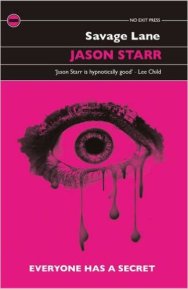
Asked and Answered – Jason Starr

41lhRv2HMRL._SX322_BO1,204,203,200_Jason Starr’s latest release Savage Lane is a dark thriller that highlights the pervasiveness of fantasy, the unconscious and risky desire of release by those guilty of deceit, the costs of unaddressed ‘friendly’ banter & rumour, the belief of children that adults don’t lie and the consequences of it all…

Savage lane, is a savage place and I would NOT want to live there.  Truth is a misnomer, whilst fantasy and ego, hidden behind a ‘High Paid Father” and “Soccer Mom” society is the norm. With neighbours like these? I’d run the other way..

Today, LifeOfCri.me recommends Savage Lane as a great read, and says Thank You to Jason Starr for taking time out of his launch schedule to answer a few questions…

LOC: Can you tell us a little about Savage Lane, and your inspiration for the story?

JS: It’s a dark domestic thriller about a group of dysfunctional people in an affluent submit of New York. A recently divorced woman is at the center of the story. Unknown to her she is the object of affection of an unhappily married man, and she also becomes the target of twisted psychopath. It’s a tense thriller, but there’s a lot of satire in it too.

LOC: We’ve all lost ourselves in the occasional fantasy, yet your characters seem to take this to another level, how challenging was this to write?

JS: I wanted to make the characters as real and identifiable as possible. Yes, their behavior is heightened, partly because I wrote the book from a close third person point of you. I wanted readers to be privy to the darkest, most intimate thoughts of each character, to amp up the psychological tension. The challenge was in keeping the momentum of the story moving forward and still tell a story that is very behavioral. When I’m writing I love to push myself, though; that’s a big part of the joy I get from writing.

LOC: So what is your writing space like, and do you have a regular writing routine?

JS: I don’t have any writing space! By design actually. I much prefer to leave my apartment to write, so my “office” is a combination of coffee bars in Manhattan.

LOC: What are you working on at the moment / What’s next for you?

JS: I’m at work on a new psychological thriller, a TV pilot that I’m co-writing, and a new comics project. I prefer to work on a few projects at once–keeps things fresh and I’m more creative under pressure. I love deadlines.

LOC: What’s the best piece of writing advice you’ve every received?

JS: Good question! Ronald Ribman, a family friend who is a successful playwright, once advised me to always say “Yes” to opportunities. I didn’t take this to mean to take on projects that don’t excite me, but in general it’s a huge mistake for a writer to turn down work because they think they are too busy. Say yes and find the time.

LOC: Who inspires you?

JS: Everyone who ever rejected me or didn’t get behind my career.

LOC: In between projects how do you like to relax / enjoy your spare time?

JS: Spend time with my daughter, family and friends. Read, see movies and plays, a day at the racetrack.

LOC: What’s the strangest sentence you’ve written/read this week?

JS: Haven’t written much this week–been mainly traveling a promoting Savage Lane!

For the LifeOfCri.me quick fire round

Fact or Fiction? fiction

Film or TV? TV

Book or E-book? Book

Cats or Dogs? Dogs

Early Mornings or Late Nights? Both

Hot or Cold? Huh?

Relaxing or Adrenaline Fuelled? Relaxing


Savage Lane is out now in paperback, e-book and as an audible download…

Posted in Articles, Blog Touring, Guest Posts

David Young On Trabants, Ketwurst and Blue Stranglers

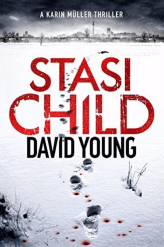
Debut novelist David Young’s first Oberleutnant Karin Muller novel, Stasi Child is out now for Kindle, and here as part of his blog tour, David talks to LifeOfCri.me about a few of those things particularly loved by the East Germans.


imageEast Germany – or more properly, the German Democratic Republic (Deutsche Demokratische Republik in German) – is now a lost world, and many would say that’s for the best, trapped as its citizens were behind the fortified Berlin Wall and the inner German border.

But twenty-five years after the two Germanies reunited (the anniversary was earlier this month), there are still some things from the communist state that its former inhabitants hanker after. It’s spawned a form of nostalgia with its own name – Ostalgie. In my novel Stasi Child there are plenty of references to products and brands which were peculiarly East German. Some were so popular they still survive today.

Cars

My detective, Oberleutnant Karin Müller, and her deputy, Unterleutnant Werner Tilsner, drive around in an unmarked police Wartburg. But the most iconic East German car was the much-maligned Trabant. The Trabi can still occasionally be seen on the streets in eastern Germany today, even though it was made out of a strange product called Duroplast – a mixture of recycled cotton and resin. It had a horribly inefficient two-stroke engine, a top speed of 62 mph, and emitted between five to nine times the pollution levels of even an average 2007-vintage western European car. Nevertheless, they were much sought after, with citizens often on a years-long waiting list, so lucky owners maintained them meticulously. Wartburgs – a step up from the Trabi – were made of steel, and were even exported to the UK. Müller and Tilsner in Stasi Child would probably have driven a Wartburg 353 – nicknamed ‘Farty Hans’ because, like the Trabant, it was a two-stroke with copious exhaust emissions.

Food

In the original draft of Stasi Child, I had Müller eating a Ketwurst – a ketchup wurst (the German name for sausage) bought from an outdoor stand. The Ketwurst was an East German ‘invention’ – developed by the fantastically-titled State Gastronomic Research Centre – to rival the American hot dog. Then I discovered it didn’t come into being until 1977 or ’78, while the novel is set in 74/75. So instead she wards off her hunger with a quarter Broiler. The broiler was simply grilled or fried chicken and an East German fast food staple.

Other famous East German food products include the ones listed by my teenage characters in the second, parallel narrative of Stasi Child. For example, Nudossi (sometimes nicknamed Ost-Nutella) – a hazelnut and chocolate spread which actually has a higher proportion of hazelnuts than its western equivalent and is still produced today (it’s delicious!). Another is Spreewald pickles – pickled gherkins in glass jars produced in a wooded area 100 kms south-east of Berlin, which famously feature in the film Good Bye Lenin! Then there was the GDR’s answer to Coca Cola: Vita Cola, advertised as a ‘carbonated soft drink with fruit and herb flavoring’ and like its more famous western cousin, produced according to a ‘secret recipe’.

There are still restaurants in the eastern part of Germany where you can sample traditional East German dishes. One of them – the restaurant attached to the DDR-museum in Mitte – serves the favourite dish of Müller’s husband, Gottfried, Gebackene Apfelringe (baked apple rings). This features in a particularly harrowing scene in the novel.

Alcoholic Drink

Drinking alcohol was almost a national pastime in East Germany. The GDR’s official youth movement, the FDJ, even had a song about drinking beer. In the mid 1970s – when Stasi Child is set – an East German medical specialist estimated that 5% of adults in the GDR were alcoholics: four times as many as in West Germany. In my opening scene, Müller and Tilsner wake (in Tilsner’s marital bed!) with hangovers after downing too much Blue Strangler the night before. Blue Strangler in the early days of the GDR referred to 40% proof crystal vodka, and got its nickname from the blue label of the bottles (a later version actually branded as Blue Strangler was actually a grain schnapps of lower alcohol content). Although former East German detectives I spoke to insisted there was no drinking on duty or during a case, alcohol was part of daily life. East German women’s magazines even advised a special diet for those wanting to lose weight: the wurst and vodka diet!

Interestingly, when the 1989 protests which led to the dismantling of the Berlin Wall and East Germany began, alcohol consumption slumped to historic lows within a matter of weeks.


Stasi Child by David Young is out now in ebook. The Paperback will follow in February 2016.

Posted in Articles, Blog Touring, Guest Posts

Rob Sinclair talks Thrillers: Books vs Big Screen

As part of his mini blog tour for Rise Of The Enemy, author Rob Sinclair talks to LifeOfCri.me about books and the big screen.

Author portrait

Thrillers: Film versus books

I’m a huge thriller fan, whether it be books or film, and it’s probably no surprise therefore that so many of my readers have commented how they think the Enemy Series would translate so naturally onto the big screen (any Hollywood producers reading this, just give me a call). So which is best and why?

I’m not sure I have an answer to that. I love both books and films for different reasons. Books are special to so many people. With a book you transport yourself into your own world. Ok, so it’s the writer’s words you’re reading, it’s his or her characters, but those characters come to life for each and every reader and they do so in a different way. The way every reader feels about the book and the characters, how they see the setting in their heads, how they view the characters and the emotions the characters feel, is an entirely personal experience. That’s what makes a book so powerful. And as a writer, the part that I get real satisfaction from is really exploring the psyche of my characters. I like getting into their heads and drilling down to the very core of who they are. On screen, and in writing a screenplay, you just can’t get to that same depth because such a large part of the unspoken elements of the plot are purely visual.

That said, on the flip side, it’s the visual potency of films which I love. In many ways they can be a lazy alternative to books, and films definitely engage the brain in a different way than books do. But I still love them. I love the sweeping visuals that you can get, and the painstaking and gritty detail that we get to see in action scenes which has so many more levels to it than you could ever write down on a page. And films can be incredibly emotional too. We don’t get to be inside the characters’ heads in the same way as in a book – as there simply isn’t the inner narrative – but when you get a top-notch script and top-notch actors in place, there’s no doubting that you can feel a wide range of emotions watching a good film. And we feel great connections to actors and actresses because of this. It’s why they are such big A-list celebrities.

As for my own books, in many ways I think they are perhaps something of a hybrid between traditional book and film. I love both formats and have been influenced greatly by both and even though the books I’ve written are very definitely novels and not screenplays, in my head they play out more like a movie, with a big emphasis on visuals. My writing evolved in many respects as a collection of scenes, much like you’d get in a screenplay. I think that’s just the way the plots are formed in my head and the way that I translate them onto the page. I think of a scene, I flesh out the scene as much as I can in my mind, and then I write it out.

So which is best: book or film? Well, the jury is still out as far as I’m concerned. But it’s on my to-do list to re-write each of the books of the Enemy series into screenplays. I think they’d all work in that format and I’m excited to see how they look and feel. And maybe one day, when the big screen version of the Enemy series hits your local cinema, you can come and tell me which version you liked best.

image003Rise of the Enemy is available to buy now.


Posted in Articles, Blog Touring, Guest Posts

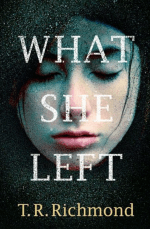
Blog Tour: What She Left by T R Richmond

What She Left is a cleverly constructed fractured timeline novel, that re-builds the life of deceased journalist Alice Salmon, using the digital footprint left by herself and those she knew.  As part of his blog tour, T R Richmond writes for LifeOfCri.me about using multiple character first person narration.

Writing in the first-person offers benefits and challenges to a writer.

It allows you to really get inside the head of a character, exploring their brain’s innermost workings. The downside is you can only ever include what’s in their head. If your character hasn’t thought it, seen it or done it, it’s cheating to include it. 

When I was planning What She Left, I wanted to have my cake and eat it. I wanted to see the world as all my characters did. So I wrote the book from multiple first-person perspectives. 

This has always struck me as the most honest form of narration, because in reality we’re all the first-person narrators of our own lives. 

Our own take on events, our own view of the world and our narrative seems sacrosanct to us, but it runs alongside everyone else’s – at times diverging from theirs, at times converging with theirs. Some facts are inalienable, but we all see things differently – hence disputes over so-called ‘facts’. Hence why life contains so many grey areas. 

Such issues of perspective and reliability are as relevant in journalism as they are in fiction. When it comes to choosing which news to read, listen to or watch, we have to ask ourselves: Whose version of events is the most accurate? We have to ask ourselves: Who can we trust? We have to ask ourselves: are we looking for our existing world view to be reinforced?

The internet has been a game-changer when it comes to the reliability of news. Anyone can share information now and, while this “democratisation” brings benefits such as quickening the dissemination of news and challenging the exclusive cabal of information providers, it also means we’re exposed to heavily subjective material. 

Many journalists are as passionate as ever about objectivity and balance, but as “consumers” of news it’s vital we ask who the narrator is of any particular piece of work. What’s their agenda? Because, however objective a piece purports to be, if you follow it back far enough, it’ll be the brainchild of someone with inherently subjective opinions. The solution, perhaps, is to develop broad tastes when it comes to journalism, as we’re always advised to with fiction. That at least gives us a counterbalance, exposing us to multiple sides of any particular argument. Remember, in journalism as in life, there’s no such thing as an entirely reliable narrator. Hence why fiction written in the first-person can feel so authentic.

T. R. Richmond


image
Click here to buy

What She Left by T. R. Richmond is published by Michael Joseph on 23rd April, priced £12.99

Meet Professor J Cooke on Tumblr and Alice Salmon on Facebook

Posted in Articles, Blog Touring, Guest Posts

Anthony Quinn:- The nuances of using fact to create fiction

Anthony Quinn, author of critically acclaimed debut novel Disappeared, returns with his new novel, The Blood-Dimmed Tide, the first in a series of three historical novels set in Ireland during WWI and the War of Independence. Here he talks to LifeOfCri.me about the nuances of using fact to create fiction.

AQ photo from Mysterious PressI’m very much a believer in writing first and researching later. The danger of writing historical fiction is that as a writer you run the risk of disappearing down a wormhole into another era, never making it back with a clear-cut, compelling tale to relate. I’ve been obsessed with WB Yeats and the Sligo setting for years, and in writing The Blood Dimmed Tide the temptation was to succumb to excess and include a rich tapestry of historical minutia.

However, writing historical fiction, especially a mystery story, should be like steering a boat with a leak in high seas. Many loved items have to be chucked overboard with every page you write. Amusing anecdotes and fascinating details that don’t animate your principal characters and move the plot along have to be discarded with impunity.

For this reason, I resorted to thumbing through Yeats’ biographies only when there was a gap in the plot that desperately needed filling, or a scene that required fleshing out with something concrete. That sense of urgency which comes with keeping the literary boat from capsizing at all costs is a protection against procrastination and getting lost in the past.

Another great challenge in writing The Blood Dimmed Tide was remaining faithful to the historical record of Yeats and his life-long muse Maud Gonne. I was uneasy with the idea that I was possibly doing them a great disservice by entangling them in a plot involving occult societies, spies, smugglers and corrupt policemen.

However, Yeats has been much derided for his ‘creepy’ obsession with the supernatural, and his interest in the magical powers that might be acquired through esoteric knowledge has alarmed many literary critics over the years. It eased my conscience to think that I was at least portraying this side of his character sympathetically. This was what I promised WB Yeats at the start of writing The Blood Dimmed Tide. Whether or not I delivered is another matter.

Blood Dimmed jacket

I hope I am saved by the fact that many of Yeats’ friends found him unknowable. Irish writer Sean O’Faolain famously said of him: “There was no Yeats. I watched him invent himself.” In that sense, he is impossible to capture within the covers of a biography, which is a great problem for his biographers, but a golden opportunity for a novelist.

Yeats will always remain an enigma. He was one of a group of extraordinary and mesmerising figures that made London at the turn of the century an emporium of exotic cults and psychic societies. He was the closest thing we have to a supernatural sleuth, always seeking answers, always probing the evidence before him, always odd and unpredictable in his behaviour – which I hope makes him the perfect hero for a mystery story, especially one that involves ghosts, spies, smugglers and corrupt policemen.

The Blood Dimmed Tide is published by No Exit Press and is available now in paperback and as an e-book.

Posted in Articles, Blog Touring, Guest Posts

Back To School: The Art of Thriller Writing by Dreda Say Mitchell

VBanner

As part of the blog tour for her new thriller Vendetta, Dreda Say Mitchell talks to LifeOfCri.me about the art of thriller writing.

Dreda I’ve worn a number of hats in my career and one of them has been teaching. In the classroom, one of the favourite catchphrases (after folding your arms) is “Now children – what have we learned today?” Another hat I wear is as a journalist and we’re all familiar with the top 5 tips or lessons feature. Meanwhile, in my work as an author, I’ve shifted direction with my new thriller ‘Vendetta’. What better way to prove that I can multi-task than by compiling a top 5 lessons I’ve learned from writing thrillers?

1. Characters

Characterisation is an important building block of any kind of fiction but in thrillers it’s an essential feature. Thriller readers tend to read a lot of books and they’ve got an eagle eye for cardboard cut outs and stereotypes. Heroes and villains may (or may not) be exaggerated versions of people you meet in everyday life but they still need to be grounded in reality. The question to pose is not, would a character behave in a certain way – but could they? In ‘Vendetta’, our hero Mac might go well beyond the bounds set by his job and personality – but is he a believable person?

2. Plot

A well-crafted thriller plot is rather like a Swiss watch and fits together like a jigsaw puzzle. It needs to be compelling enough to keep the reader hooked and provide them with evidence to work with, while at the same not cheating by dodging the rules of the genre. This is a very difficult trick to pull off. In ‘Vendetta’, Mac’s lover has been murdered and he has to find out by whom and why. The reader has to be there to help and work it out along with him but to share his shocks and surprises.

 3. Pace

Literary writers are allowed to spend ten pages describing a situation in which nothing in particular happens or theorising about the human condition but that doesn’t work in thrillers. The reader expects the author to get a move on. One classic method of doing this is to give your hero a set time limit to solve his case before it’s too late. In ‘Vendetta’, Mac’s got less than a day. The clock is ticking.

4. Series

A thriller doesn’t need to be part of a series to be effective, but as the saying goes, it helps. Once a reader decides a character is working for them, they like to learn more about them and see how they operate in different circumstances. I decided a series was how I wanted to write but I wasn’t interested in the lone hero model. In addition to Mac, there are two other main characters, Rio and Calum along with lesser characters. In the next book, ‘Death Trap’ I turn my attention to Rio as the main protagonist and in the novel to follow that, it’s Calum. When I decide some of minor characters have legs, there’ll be reappearing too.

5. The X Factor

We’re probably all familiar with people we know who seem to have it all. The ideal spouse and family, the great job, the interesting life – and yet it doesn’t seem to work for them and they’re booked with counsellors on a regular basis. Thrillers can be rather like that. Compelling characters, plot, lean, taut and effective writing, all of which leads up to that classic showdown in the final chapter. Yet it doesn’t fly, your attention wanders and it becomes one of those books you leave lying around, always meaning to finish. The frustrating thing for writers and readers alike is that no really knows why this is. I’m hoping that ‘Vendetta’ has the X Factor

V Cover

VENDETTA by Dreda Say Mitchell is out now in paperback and eBook, published by Hodder, £6.99. For more information visit www.dredasaymitchell.com and follow Dreda on twitter @DredaMitchell

Find out what I thought of Vendetta, with the LifeOfCri.me review here

Posted in Blog Touring, Reading, Reviews

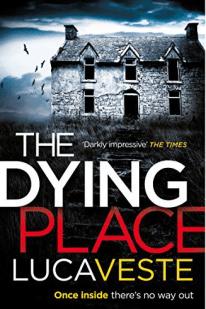
The Dying Place – Luca Veste

image
Once inside…there’s no way out

A fate worse than death…

DI Murphy and DS Rossi discover the body of known troublemaker Dean Hughes, dumped on the steps of St Mary’s Church in West Derby, Liverpool. His body is covered with the unmistakable marks of torture.

As they hunt for the killer, they discover a worrying pattern. Other teenagers, all young delinquents, have been disappearing without a trace.

Who is clearing the streets of Liverpool?

Where are the other missing boys being held?

And can Murphy and Rossi find them before they meet the same fate as Dean?

We all know about them, have seen the stories, listened to the news and watched them gather. Some of us have been on the receiving end of their actions.  The ‘feral youths’, the lost and disenfranchised children society doesn’t have any time for.  We’ve all judged them, silently, passively, perhaps vocally.  But who are we to judge?

The Dying Place is the second outing for Detective Inspector David Murphy and DS Laura Rossi and maintains the dark undertones of Dead Gone with the pair searching for a vigilante cleansing Liverpool’s youth community.  Murphy, still scarred from his run in with a serial killer is walking a fine line trying to keep his marriage together when the first body is found. As the body count increases the tension ratchets up rapidly and when a policeman is shot in the line of duty, Murphy knows he must do all he can to catch this killer before more people die.

What follows is a trail of violence and a shocking final showdown that left me with quite a lump in my throat.  The Dying Place is superbly written and will have you asking moral questions not just of the characters, but of yourself.  It also succeeds in keeping you guessing as to the real identity of the villain before it is revealed and ensures you want to do nothing more than keep turning those pages until the story plays out.

It’s a fantastic follow up to an amazing debut and highly recommended for all crime fiction fans. The Dying Place is Out Now for Kindle, and available in Paperback from December 4th 2014

Posted in Blog Touring, Reading, Reviews

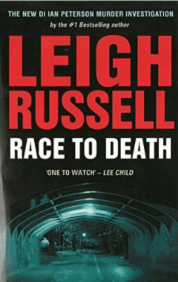
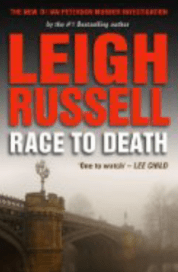
Race To Death – Leigh Russell

imageWhen a man plummets to his death from a balcony at York races, his wife and brother become suspects in a murder enquiry. Meanwhile Richard is being stalked by a killer issuing death threats. Richard is reluctant to go to the police, for fear his own dark secret will be exposed. Newly promoted Detective Inspector Ian Peterson is investigating the death at the races when a woman’s body is discovered. Shortly after that, Richard is killed. With the body count increasing, the pressure mounts for his team to solve the crimes quickly. But the killer is following the investigation far more keenly than Ian realises and time is running out as the case suddenly gets a lot closer to home…

Race To Death is the second outing as a main lead for DI Ian Peterson, a character that appeared originally in the first three Geraldine Steel books by the same author.  In Race To Death he has recently accepted a promotion from DS to DI which involves moving hundreds of miles from his current home to the city of York.  This move is just one of the things I enjoyed about Race To Death, as a new location and new colleagues means the chance to get to know a whole host of new characters making this a new start for the reader as well as the protagonist.

With a wife already unhappy with the demands of ‘the job’ on his time and as yet unsettled in their new home, under pressure from a boss he is struggling to find common ground with and a murder case leading to nothing but dead ends, DI Peterson has his work cut out.  Out to impress he is determined to do what it takes to find the killer.  Russell has written these new relationships well so it is easy to identify with the characters as they settle into their new routines.

image

The plot has more than enough false leads to keep you guessing to the very end. It throws you straight into the action, and the tempo continues at a steady beat throughout ensuring you won’t want to put it down until you know whodunit.

All in all it’s a riveting read and I’m really looking forward to finding out what’s next for DI Peterson.


For your chance to win a copy of Race To Death, tweet this post and follow @LOCrime, or leave a comment below.