Today as part of the LifeOfCri.me Theakston’s Crime countdown he’s writing talking to us about the inspiration for his book.
At the start of my new novel, The Breaking of Liam Glass, Jason Crowthorne, a keen young journalist, about to lose his job on a local paper, comes across a teenage footballer, stabbed and hospitalised in a coma.
Believing he’s found a way to save his career, he pitches his story to a tabloid. Unfortunately, the tabloid wants more of a celebrity hook – a hook Jason doesn’t know if he can provide. But maybe he can tweak it a little…
And so he’s led, step by step, into the dark and dangerous world of fake news.
Where does inspiration come from?
When I started Liam Glass, seven years ago, I wasn’t actually looking to write a novel, let alone a crime-satire.
At the time, there was a general election in full swing and the level of political debate was reaching a new low. Politicians repeated slogans until you wanted to tear your ears off. Newspapers either parroted the party line or were confused and ineffectual.
We didn’t yet use the phrase “fake news” but there was definitely a lot of it around.
At the same time, there was serious, real news, not least a spate of tragically fatal stabbings here in North London, almost all involving innocent young men who were in the “wrong” place.
I recalled a time I spent in Portugal, writing the screenplays for two feature films. Portugal endured the longest fascist dictatorship of any European country in the last century – forty-eight years – from 1926 to 1974.
But one of the most important causes of the collapse of democracy in the first place was the fact that nobody could rely on the newspapers to tell them the truth.
The next piece of the jigsaw, unexpectedly, turned out to be a short story I’d written many years before. It told of a teenage boy who was attacked and left in a coma and the effect on his single mother, who contrived more and more desperate plans to get him to wake up. The story, ‘Cash Card’, was short-listed for an award, but I hadn’t thought about it since.
But I needed one more piece to make the novel work – and that fell into place when my comatose teenager was joined by a young local journalist, stuck in his job and desperate to work on Fleet Street, whatever it took.
Into my young, frustrated journalist, who was to become Jason Crowthorne, I poured my own conflicted feelings and frustrations – as writer, certainly, but also as a reader of news.
I’ve always admired British tabloid newspapers, even as I’ve watched their actions with deep suspicion.
It’s easy to hate their easy cynicism and looseness with the truth, but there’s also something attractive about the red-tops’ energy and audacity. On a good day, a tabloid can mount a vibrant campaign to improve public life in a way that the broadsheets simply can’t match.
Near the end of my novel, two otherwise cynical editors on my fictional tabloid (The Post) reminisce about the great campaigns of the past – “obesity and body image, postcode health, MPs for sale, rip-off trains, graduates who couldn’t spell.” They have much to be proud of.
I spent some days at the Daily Mirror researching Liam Glass in their massive open-plan newsroom, and was struck by the sight of enormous blow-up front-pages around the walls, each commemorating a memorable headline. Often these were major campaigns.
Of course, not everything that the tabloids have done has been so admirable – from phone hacking to bribery to doorstepping the innocent.
On the one hand, Jason is a figure of satire – ready to sell his soul, if only he can find a Fleet Street editor to buy. On the other hand, Jason is truly horrified by this apparently unstoppable flow of knife crimes and wants to do something about it.
And if in the process it helps his career, what’s the problem?
Jason’s problem is that he suspects that Liam may well have a celebrity connection, secretly fathered by a major premiership footballer. But he can’t prove it. How far will he go, how much is he prepared to trick, cheat and finagle to get that front page?
I had to write the novel to find out. And as I wrote, part of me was shocked at what he turned out to be capable of doing. Yet part of me loved his breath-taking effrontery, his naive yet beguiling way of crashing through walls that I would have never dared do.
I found myself wanting him to succeed, somehow to overcome each new disaster, despite all the darker, more corrupt, people around him.
When I first spoke to my (then) agent about Liam Glass and how topical it seemed, he warned me that novels don’t chase topicality. However, it seems that some themes stay topical, and will probably remain so for much longer.
And now today, seven years later, we have another fractious election, with probably yet another to come, with newspapers content to peddle fake news and knife crime on the rise. How things change!





 Paul Finch studied History at Goldsmiths, London, before becoming a cop in the north west of England. He then let his passion for writing allow him to follow a career in journalism. Now a full time writer, he first cut his literary teeth penning episodes of the British TV crime drama, THE BILL, and has written extensively in the field of children’s animation. However, he is probably best known for his work in thrillers and horrors.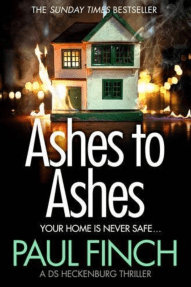
 Charles Harris is an international award-winning writer-director and a highly-respected script consultant, writing and directing for cinema, television and theatre. He is also a best-selling non-fiction author with titles including A Complete Screenwriting Course, Police Slang, and Jaws in Space. Several of his short stories have been published, with two shortlisted for awards.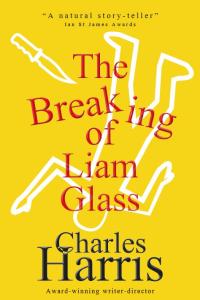
 Life of Cri.me