Thanks to Iceland Noir for the heads up on what looks like a fabulous one day crime fiction festival coming to the south-east in March. Further information can now be found here:- dealnoir.wordpress.com
If you happen to be in the south-east (of England, that is, not the south-east of Iceland) in March, then check out Deal Noir, a small but beautifully crafted one-day crime fiction event taking place on the 28th of March in the coastal town of Deal, overlooking the Goodwin Sands.
It has been organised by those criminal stalwarts Susan Moody and Mike Linane, and the line-up for the day looks undeniably tasty.
Well that’s 2014 over, and what an amazing year that was!
Picture by Fenris Oswin – Fenris.co.uk
Of course the highlight for me will always be my now fiancé proposing to me at the end of a panel during this years Theakston’s Old Peculier Crime Writing Festival, Harrogate. He couldn’t have chosen a more fitting venue and I will be eternally grateful to the 2014 festival chair Steve Mosby, and the rest of the festival planning committee for helping to make this happen.
Not only that but, I’ve also got the good fortune of being able to re-live the moment whenever I want, as the download of the panel itself (In Space, No One Can Hear You Scream) is available to buy from the festival website and the recording has his proposal (although not my squeaked out answer) on the end of it. That £3 purchase was definitely one of my best of the year!
Picture by Fenris Oswin – Fenris.co.uk
That was closely followed by appearing with friend and crimesquad.com editor Chris Simmons on this year’s ITV3 Specsavers Crime Thriller Club TV show. Not only did we have two fabulous days out in ‘that London’, meeting new and interesting people, catching up with author friends and laughing with Bradley Walsh, we also WON.
Closer to home it’s been great for me to see this blog really start to increase its traffic (I’m still hoping to break that magic 1,000 followers before the end of the year – sitting at 976 as I write) and getting the opportunity to participate in the blog tours of some brilliant crime reads…
Then of course there were also these fabulous books
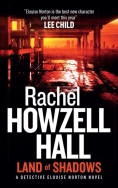
Land Of Shadows – Rachel Howzell Hall
I have read several highly accomplished debut novels this year, but this is one that sticks in my mind. Homicide Detective Elouise Norton is someone I’m keen to hear more about. Tough and driven, yet at times insecure. With a fascinating setting on the ever changing border of a gentrifying Los Angeles, it’s a great debut.
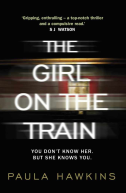
The Girl On The Train – Paula Hawkins
“To everyone else in this carriage I must look normal; I’m doing exactly what they do: commuting to work, making appointments, ticking things off lists.
Just goes to show”
Not published until Jan 15th 2015, I am jealous that so many of you have such a fabulous book yet to read and experience. I urge you all to grab it as soon as it comes out, as I guarantee it’s going to cause quite a stir.
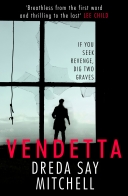
Vendetta – Dreda Say Mitchell
In a distinct change of direction to the race against time thriller, Mitchell has produced a gripping read, with cracking characters, storylines and a great deal of style this series could really see her giving Simon Kernick a run for his money.
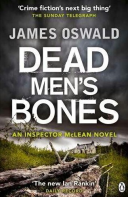
Dead Men’s Bones – James Oswald
The fourth and latest of Oswald’s books featuring Detective Inspector Tony McLean. With its supernatural twists on the standard police procedural, this is one series that just gets better and better with Dead Men’s Bones proving to be the best yet.
The Killer Next Door – Alex Marwood
Dark, chilling and impeccably plotted, it’s an interesting insight into the secrets that lurk behind closed doors, how little notice we all take of the world around us and asks the question just how well do we ever really know our friends and neighbours?
These few aside there a are plenty more delightful, intriguing and thrilling books out there, and many of those that are currently featuring on an awful lot of top 10 lists this year are staring at me mournfully from my on the verge of collapse to be read pile. I’m looking forward to being able to sit down and catch up with just a few of them over the coming months.
My end of year tally for books read came to a grand total of 123 missing out by more that I would have liked, on beating last years total of 130, so I’ll be going all out to exceed both of these numbers next year.
Here’s looking forward to and wishing you all a fabulous, book filled 2015.
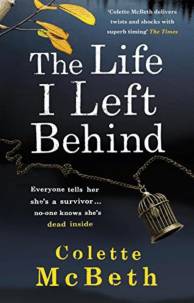
“I’m the only one who knows the secrets her friends have hidden, the mistakes the police have made. I’m the only one who can warn her she’s still in danger. I know exactly who attacked her. He’s the same man who killed me.”
Six years ago Melody was attacked and left for dead. She survived by burying her memories, confident that her attacker was convicted and imprisoned. The the body of another woman, Eve, is discovered.
The women were strangers. But Eve knew all about Melody’s life, She has left behind her story, the clues that will force Melody to confront her own lies. The clues that will put her life in danger all over again.
Want to start the New Year with a big book bang? Published on January 1st, The Life I Left Behind is the book to do it with. After her cracking debut novel Precious Thing, Colette McBeth returns with the legendary ‘difficult second novel’ and immediately proves that there is no such thing.
Written from the perspective of three main characters, Eve, Melody and DI Rutter, The Life I Left Behind is a compelling read, pulling you into its web of intrigue as the individual narratives intertwine brilliantly in order to allow the mystery to unravel and the killer to be revealed.
From the outset the murder of Eve Elliot appears to be an open and shut case. The man responsible for the attempted murder of Melody years before has just been released from prison, and the attacks are strikingly similar. DI Rutter isn’t so sure, not one for cutting corners she doesn’t believe that it is quite so straightforward. With her old boss, the man responsible for solving Melody’s attack keen for Rutter to follow his lead and close the case, she has her work cut out for her, making sure they have the right man.
In the meantime, Melody, now reclusive and withdrawn from the world, is about to discover the true price of her attack, how much of her life she really lost on that fateful day, and just how little has changed in the years since.
I absolutely loved The Life I Left behind, Eve and Melody are well drawn characters that have you keen to find out more about, to find out what happened and to see how everything turns out, so don’t be surprised if you find yourself still sitting reading two hours after you picked the book up to squeeze in a few quick chapters. With a plot you can easily lose yourself in, that has a devilish twist in the tale The Life I Left behind comes highly recommended.
Iceland Noir takes a break in 2015, and moves over to Shetland for the year.
Shetland Arts and Promote Shetland are delighted to announce that Shetland Noir, in association with Iceland Noir, will take place at Mareel from Friday 13 November until Sunday 15 November 2015.
The Crime Fiction Festival will be the first of its kind ever to be held in Shetland and the headliners will be: Denise Mina, Stuart MacBride and Alex Gray from Scotland, and Arne Dahl, Yrsa Sigurðardóttir and Hakan Nesser, representing the Nordic countries. Further writers will be announced in 2015.
The festival will be centred in Mareel, and a festival ticket, on sale now via Shetland Box Office, will ensure access to all of the panel events, and to a choice of fringe activities which will include specialist bus tours and other activities, to be announced in 2015. Further information about Shetland Noir, in association with Iceland Noir, is available on the festival website www.shetlandnoir.com and festival tickets can be purchased from Shetland Box Office in Mareel & Islesburgh, over the phone on 01595 745 555, and online at mareel.org and shetlandboxoffice.org.
The 10 shortlisted authors will get a crowdfunding campaign that may see their story published and sold around the world. All author royalties earned from the book sales will be donated to “The Hope Academy for Girls” — a self-sustaining, multi-purpose school for at-risk girls in the rural area of Sierra Leone. So not only could you get to see your work in print, but you could help to fund the education of young girls in West Africa, without a doubt a very worthy cause.
The competition runs from 1st December 2014 until 31st January 2015 and is open to ALL authors from ANY country. Remember, the theme is crime/thriller and ideally word count should not exceed 7,500 words.
The overall winner will also see their story’s title chosen as the compilation’s title.
Rules of Entry
Participants need to register and publish their entries on Scriggler.com
All entries must be previously unpublished.
Entry is not limited to UK residents. Authors can be based in any country for the purposes of this competition.
Only entire stories would be considered, no extracts.
Word count should not exceed 7,500 words.
While authors keep their rights when publishing on Scriggler, the purpose of the contest is to compile and publish a book of short stories and winning authors would be expected to enter into an agreement with BNBS. Please consider this when entering.
Further information including introductions to BNBS, Scriggler.com, and what will happen to all entries once submitted can be found on the Scriggler.com website here.
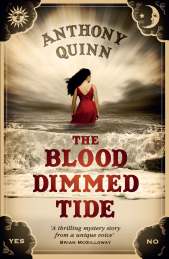
London at the dawn of 1918 and Ireland’s most famous literary figure, WB Yeats, is immersed in supernatural investigations at his Bloomsbury rooms.
Haunted by the restless spirit of an Irish girl whose body is mysteriously washed ashore in a coffin, Yeats undertakes a perilous journey back to Ireland with his apprentice ghost-catcher Charles Adams to piece together the killer’s identity.
Surrounded by spies, occultists and Irish rebels, the two are led on a gripping journey along Ireland’s wild Atlantic coast, through the ruins of its abandoned estates, and into its darkest, most haunted corners.
Falling under the spell of dark forces, Yeats and his ghost-catcher come dangerously close to crossing the invisible line that divides the living from the dead.
Poets, politics, the paranormal, this book has it all.
After the success of his first novel Disappeared, Anthony Quinn returns to Ireland with new title The Blood Dimmed Tide, only this time it is to an Ireland heading towards the end of the First World War, when the country is striving for separation from Britain, the Anglo-Irish aristocrats are abandoning their great homes to flee to England, and Irish prisoners destined for execution are instead being returned to their home.
As someone who doesn’t usually read historical crime, and given the alternative first/third person narrative of the story I felt it took me a little longer to become gripped by the story than I am used too, but once I was hooked I was hooked. With its myriad themes and characters there is something in here for everyone.
I also enjoyed the setting and felt that the Ireland envisioned in the tale is almost a character in itself. Quinn is adept at creating haunting and atmospheric visions of Ireland at this time, which I felt really enhanced the supernatural feel and mysteriousness of the tale.
The Blood Dimmed Tide has been billed as the first in a series of three historical novels set around WW1 and The War of Independence, and it has certainly sparked an interest in me around this period in history, so I’ll be looking out for more from Mr Quinn.
Reykjavik in November is dark. That’s probably the first thing you notice. I’m used to getting up before it’s properly light, but usually the dawn starts to spread as I take the dogs out, check the livestock and get my breakfast. Here the blackness is total as the alarm goes off, still pitch over coffee and bacon, and treacherous on the walk from Hotel Holt to the Nordic House across a bog of noisy ducks and sulphurous smells.
And yet somehow I don’t mind. I’m here for the second Iceland Noir, the newest kid on the crime fiction festival block and fast becoming one of my favourites. The festival has grown, now filling two days with panels and signings rather than just one. It’s still organised by the tireless Quentin Bates, Ragnar Jónasson and Yrsa Sigurðardóttir, aided this year by Lilja Sigurðardóttir. And what a great show they put on for us.
As might be expected from a crime fiction festival set in Iceland, the influence of Nordic writers and writing featured in many panels. Topics included Nordic Influences, Works in Translation and my favourite (perhaps biased here) Is Scotland Nordic? (answer – no). All the panels were well attended and the discussions lively. I would liked to have attended them all – something that would have been possible as they are run one after the other and with enough time in between to have a quick coffee (and pop outside for that rare glimpse of daylight). Alas, technology had other ideas and I missed several re-recording a lunchtime interview after the German journalist’s mini disc recorder decided it didn’t like what I was saying.Photo by murderiseverywhere.blogspot.co.uk
Perhaps the best thing about Iceland Noir though is not the panels but the time between them, when everyone mingles outside the hall, chatting about books, Reykjavik, the endless darkness and a hundred hundred other things. English is the default language, which I find rather humbling. Plenty of Brits make the journey over the North Atlantic – this year’s UK writers included (in no particular order) Peter James, Zoe Sharp, Michael Ridpath, David Hewson, Craig Robertson, Louise Millar, Sarah Ward, Mari Hannah, Susan Moody, and William Ryan – but there was notable home grown talent from Ragnar and the two Sigurðardóttirs, Solveig Palsdottir, Viktor Arnor Ingolfsson and many more whose names stretch my ability to find strange letters on the keyboard. This year saw Swedish author Johan Theorin make the journey, along with Finland’s Antti Tuomainen and Norway’s Vidar Sundstol, and ex-pat American David Swatling came over from Amsterdam with his fascinating tale Calvin’s Head. Truly Iceland is a meeting place of nations.
In addition to the panels, there were a couple of crime writing workshops hosted by William Ryan, and a Reykjavik Crimewalk, guided by Úlfhildur Dagsdóttir, which sadly I missed but everyone seemed to enjoy. Saturday evening everyone piled into an exclusive restaurant housed in an old theatre building for the festival dinner, topped off by a topical crime quiz in which, inevitably, the winning team cheated. It was all very good-natured though, as seems to be the way when a bunch of crime fiction authors and readers get together.
And so the festival closed. Or at least it would have done had not Yrsa Sigurðardóttir organised a coach trip on the Sunday, out to the Snaesfellnes peninsula to visit the places that had inspired her novel ‘My Soul to Take’. The weather (and light) seemed against us as we set off, but magically the clouds rose and the sun came out as we reached the village of Arnastapi. A quick leg-stretch and cliff-top walk, then on to Hellnar. The cloud was still too low to see the glacier, so instead we were taken to a series of volcanic caves straight out of Jules Verne’s epic Journey to the Centre of the Earth. If only we could have come out at Stromboli and not into a chilly arctic wind.
Iceland Noir has grown from its initial start last year, but retains its cosiness and relaxed atmosphere. Sadly it won’t be on in 2015, relinquishing its date in an ever more filled calendar for Shetland Noir. It will be back in 2016 though, and so will I. Even in the darkness Iceland is still a wonderful place.
Grandmother Ruth Sutton writes to the man she hates more than anyone else on the planet: the man who she believes killed her daughter Lizzie in a brutal attack four years earlier. Ruth’s burden of grief and hatred, has only grown heavier with the passing of time, her avid desire for vengeance ever stronger. In writing to him Ruth hopes to exorcise the corrosive emotions that are destroying her life, to find the truth and with it release and a way forward. Whether she can ever truly forgive him is another matter – but the letters are her last, best hope.
Letters To My Daughter’s Killer exposes the aftermath of violent crime for an ordinary family and explores fundamental questions of crime and punishment. How do we deal with the very human desire for revenge? If we get justice does reconciliation follow? Can we really forgive those who do us the gravest wrong? Could you?
I’m a big fan of books written in letter / diary format as I find they are usually far more emotionally charged and are an enjoyable and easier way in which to connect with a character.
Letters To My Daughters Killer ticks all those boxes for me, in fact I actually sat and read it in just one sitting because there was absolutely no way I was putting this book down once I had started. The rawness of the emotions involved leaps from the page, and you can’t help but feel every shred of anger, rage, hurt and disappointment that Ruth is feeling.
Beginning four years after the murder of her daughter Lizzie, it follows the events immediately after her death, the police investigation and the arrest and trial of her murderer. The trial scenes are some of the best I’ve read, coming across as true to life of real court cases, and as the killer’s legal team spin their case you will feel as uncertain as Ruth as to whether or not the culprit will pay for his crime.
If you are looking for something different from your usual police procedural, psychological thriller, or race against time novel, you will not go wrong in choosing Letters To My Daughters Killer.
Anthony Quinn, author of critically acclaimed debut novel Disappeared, returns with his new novel, The Blood-Dimmed Tide, the first in a series of three historical novels set in Ireland during WWI and the War of Independence. Here he talks to LifeOfCri.me about the nuances of using fact to create fiction.
I’m very much a believer in writing first and researching later. The danger of writing historical fiction is that as a writer you run the risk of disappearing down a wormhole into another era, never making it back with a clear-cut, compelling tale to relate. I’ve been obsessed with WB Yeats and the Sligo setting for years, and in writing The Blood Dimmed Tide the temptation was to succumb to excess and include a rich tapestry of historical minutia.
However, writing historical fiction, especially a mystery story, should be like steering a boat with a leak in high seas. Many loved items have to be chucked overboard with every page you write. Amusing anecdotes and fascinating details that don’t animate your principal characters and move the plot along have to be discarded with impunity.
For this reason, I resorted to thumbing through Yeats’ biographies only when there was a gap in the plot that desperately needed filling, or a scene that required fleshing out with something concrete. That sense of urgency which comes with keeping the literary boat from capsizing at all costs is a protection against procrastination and getting lost in the past.
Another great challenge in writing The Blood Dimmed Tide was remaining faithful to the historical record of Yeats and his life-long muse Maud Gonne. I was uneasy with the idea that I was possibly doing them a great disservice by entangling them in a plot involving occult societies, spies, smugglers and corrupt policemen.
However, Yeats has been much derided for his ‘creepy’ obsession with the supernatural, and his interest in the magical powers that might be acquired through esoteric knowledge has alarmed many literary critics over the years. It eased my conscience to think that I was at least portraying this side of his character sympathetically. This was what I promised WB Yeats at the start of writing The Blood Dimmed Tide. Whether or not I delivered is another matter.
I hope I am saved by the fact that many of Yeats’ friends found him unknowable. Irish writer Sean O’Faolain famously said of him: “There was no Yeats. I watched him invent himself.” In that sense, he is impossible to capture within the covers of a biography, which is a great problem for his biographers, but a golden opportunity for a novelist.
Yeats will always remain an enigma. He was one of a group of extraordinary and mesmerising figures that made London at the turn of the century an emporium of exotic cults and psychic societies. He was the closest thing we have to a supernatural sleuth, always seeking answers, always probing the evidence before him, always odd and unpredictable in his behaviour – which I hope makes him the perfect hero for a mystery story, especially one that involves ghosts, spies, smugglers and corrupt policemen.













 Life of Cri.me