Posted in 12 Words, Author Q&A's

12 Words with C.L. Taylor

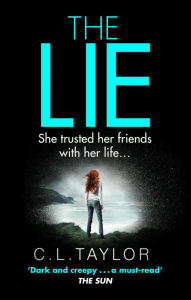
31+dITNA4bL._UX250_When I was thinking about putting together this 12 word feature I put a shout out to my author friends on Facebook, and delightfully C.L Taylor was amongst the first to put her hand up in the air and say she’d give it a whirl.  Author of thrillers The Accident (released as Before I Wake in the US) and The Lie, here’s a big thank you from LifeOfCri.me for taking up the challenge, and in turn her fabulous response.

The Rules

Answers should be complete sentences, and completed in no more than 12 words (unless otherwise stated)

Contractions count. It’s = 2 words.

LOC: I really enjoyed reading your current novel The Lie, what can you tell us about it?

CLT: It’s about friends turning on each other, a cult and fear.

LOC: How would you describe your writing process?

CLT: I brainstorm, research, make notes, plot, write, edit and then polish.

LOC: What’s the most surprising thing you’ve learnt in your writing career?

CLT: That all writers hate their book at some point.

LOC: What’s the best book you’ve read this year? (not included in word count) and why?

CLT: The Widow by Fiona Barton, Written in a deceptively accessible style but with themes that resonate.

LOC: Describe your perfect day

CLT: Any day where I get a lie in is perfect (and rare).

LOC: What is the strangest sentence you have written/read this week (limit does not apply)

CLT: It’s one of mine – ‘The voice is coming from inside my head’.

and finally just for laughs…

LOC: You wake up to find yourself on stage in front of the judges of Britain’s Got Talent, with just an Accordion, a skipping rope, and a duck. What do you do?

CLT: Pretend the duck can tell jokes. Who stole the soap? Robber ducky!

20140508-174337.jpgwpid-screenshot_2015-03-26-17-40-16-1.png

Posted in Blogging

Crime & Publishment 2016 – Book now!

On the 26th – 28th February 2016, Crime and Publishment returns with its fourth edition.  This fantastic writing course has seen no less than 5 of its previous attendees awarded publishing contracts and it aims to help you improve your writing, improve your pitches and teach you the networking skills you need so you can go out and get yours.

I’ve been fortunate enough to be surrounded by those involved in this course from the first event, and in my opinion just one of the things that makes this course so special is that when you say goodbye to the friends you will make over the three days and leave The Mill Forge, your weekend, your course and your lessons are far from over.

The support network I have watched grow over the last three and a half years has been amazing.  Previous attendees will return, to help ‘newbies’, and as the year unfolds and you meet up more and more (and you will meet up again) across both the crime fiction festival calendar and other more informal get togethers and gatherings, it’s an amazing opportunity.

Crime and Publishment always has a great line up of authors and industry insiders signed up to share their knowledge and experience with you.  The 2016 weekend is no exception, with the likes of thriller writer Tom Cain (a pseudonym of David Thomas), action writer Matt Hilton and ex Hollywood screenwriter and successful author Alexandra Sokoloff

Once again taking place at The Mill Forge, Gretna Green, there are several package options available to choose from, from single day passes, to full weekend passes including accommodation (and from numerous visits I can tell you the place is beautiful and the staff are delightful).  Full details of costs along with how to book your place can be found on the Crime & Publishment website.  Places are limited so if you want to secure your place then do make sure you book up soon.

Fancy a sneak peak at the programme?  Then cast your eyes below…

Friday 26th February
10.00-10.30am
Induction and introductions

10.30 – 1.00pm
Group A – Writing your Fights Right – Matt Hilton
Thriller author, ex-cop and 4th Dan Kempo Ju-Jitsu martial artist Matt Hilton, will both discuss and demonstrate ways to write believable fight and action sequences, while also dispelling some myths often found in fiction.

Group B – Structuring your Story – Alexandra Sokoloff
Former Hollywood scriptwriter Alexandra Sokoloff will explain the black arts of story mapping and the three act structure

Lunch

2.00 – 2.30pm
Networking for Authors – Graham Smith
Graham Smith will briefly revisit his 2014 session on networking and show ways in which authors can create opportunities to network both online and face to face

2.30-5.00
Group A – Structuring your Story – Alexandra Sokoloff

Group B – Writing your Fights Right – Matt Hilton

Saturday 27th February
10.00 – 12.30pm
Group A – Fact in Fiction – David Thomas (Tom Cain)
David Thomas (Tom Cain) has set his novels against such real events as the London Riots, the death of Diana: Princess of Wales, and the Holocaust. Listen as he gives practical advice on blending fact and fiction to enthral your readers.

Group B – Synopsising your Novel and Preparing your Pitch – Sara Hunt
Who better than a publisher to teach you how to pitch your novel? Sara Hunt of Saraband Publishing will teach attendees on the best way to pitch their novels to agents and publishers. She will explain how to grab their attention with a professional pitch and well thought synopsis.

Lunch

1.30 – 4.00pm
Group A – Synopsising your Novel and Preparing your Pitch – Sarah Hunt

Group B – Fact in Fiction – David Thomas (Tom Cain)

4.30 – 5.30pm
1-2-1 Surgeries – Various Speakers
Pick the brains of our speakers on a 1-2-1 basis to solve that thorny problem with plotting, characters or setting with advice and insight from an experienced professional.

Sunday 28th February
10.00am
Pitch session – Sara Hunt
Sara Hunt from Saraband Publishing will be accepting pitches from all attendees. Wow her with a well delivered pitch about your unique novel and you could be on the way to literary stardom.

Optional Extra
Friday 26th February
8.00 – 10.00pm
Nurturing your Characters – Graham Smith & Michael Malone
Graham & Michael will examine some well known literary characters and identify some of the traits which make them so memorable and will also discuss ways to make your characters stand out from the crowd.

N.B. This workshop is not included in the overall price and would be charged extra.


Still not sure?  Then cast your eyes over the testimonials featured on this page, along with founder Graham Smith’s page on the 2014 event here, and returning attendee Ann Bloxwich’s article on the 2015 weekend here.  Maybe next year it will be you writing a feature for LifeOfCri.me?  Who knows? There’s only one way to find out…

Further updates on the 2016 event can be found via twitter, just follow  @GrahamSmith1972 and @CrimeandPublish

Posted in Blogging, Festivals

Flash Bang 2016 – Win CrimeFest Tickets!

It’s all go on the competition front this week.  Today it’s the turn of the 2016 Flash Bang competition run by CrimeFest Bristol.

Can you commit a crime story in just 150 words?

‘A shot rang out’ is four words, but it packs a hell of a punch. Flash fiction is the art of surprise, illumination, punch.

Think short fuse, short-arm, Get Shorty. Did you know ‘flash in the pan’ originated with the priming of guns? And flashnotes are counterfeit notes… We could go on, but we won’t, because we’re big on brevity. Surprise us. Burn us. Write us. Whatever you do, do it in a flash.

Bang bang, you’re read.

It costs just £2 per entry and the first prize is a PAIR (yes a pair) of weekend passes to CrimeFest 2017 (access to all interviews, panels and receptions, exc. accommodation, dinner, travel)  with runner up prizes of a single weekend pass to CrimeFest 2017, followed by a CrimeFest goodie bag.  On top of all that, those on the shortlist will be invited to attend the Crime Writing Day on Friday 20 May 2016, when the winners will be announced.

Think you’re up for it?  Why not give it a go, after all 150 words…… how hard can it be? 😉

Entries need to be submitted by 4th March 2016, and full details of prizes and how to enter can be found here

Have fun and Good Luck!

Posted in Blogging

Reader’s Digest 100 Word Story Competition 2016 – Enter now

600x633x600x633_100-word-story-v2.jpg.pagespeed.ic.jCx00AB7f5Fancy having a go at some Flash Fiction?  Reader’s Digest has, this month launched it’s annual 100 word short story competition.

There are three categories—one for adults and two categories for schools: one for children aged 12–18 and one for children under 12.

Your stories should be original, unpublished and exactly 100 words long—not even a single word shorter or longer!

Entries must be in by February 20.

The editorial team will then pick a shortlist of three in each category and post them online on March 6.

You can vote for your favourite, and the one with the most votes will scoop the top prize.Voting will close on March 27 and winning entries will be published in our June issue.


What you can win…


Adults: The winner will receive £2,000, and two runners-up will each receive £200.

12-18’s: The winner will receive a Samsung Galaxy Tab S2 (8.0, WiFi) and a Samsung Gear S watch (choice of colour), plus £150 for their school. Two runners-up will each receive £100.

Under-12’s: The winner will receive a Samsung Galaxy Tab S2 (8.0, WiFi), plus £100 for their school. Two runners-up will each receive £75.


More information and details on how to enter can be found on the Reader’s Digest website here.

Posted in Blogging

Now open – Bristol Short Story Prize 2016

BSSPNot just one for crime writing fans, the Bristol Short Story Prize is an annual international writing competition open to all published and unpublished, UK and non-UK based writers. Each year they award cash prizes, publish the winning stories in their annual anthology.  The 2016 competition opened this week, and don’t worry if you haven’t got a story ready yet, the competition doesn’t close until 30th April 2016.  That’s a whopping SIX months away!

Here’s what their website has to say about entering and prizes.


Stories can be on any theme or subject and entry can be made online via the website or by post. Entries must be previously unpublished with a maximum length of 4,000 words. There is no minimum length. There is an entry fee of £8 per story.

20 stories will be shortlisted for the first prize and published in the Bristol Short Story Prize Anthology Volume 9.

1st Prize is £1,000, 2nd Prize £700, 3rd Prize £400. 17 further prizes of £100 will be presented to the writers whose stories appear on the shortlist.
The winners will be announced at the 2016 Bristol Short Story Prize Awards Ceremony in October 2016. The Bristol Short Story Prize Anthology Volume 9 will also be launched at the event.

Rules of entry, and further information on prizes and previous winners can be found here.

Posted in Author Q&A's, Blog Touring, Guest Posts

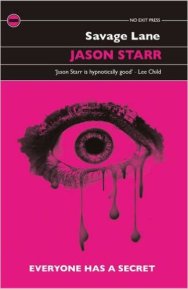
Asked and Answered – Jason Starr

41lhRv2HMRL._SX322_BO1,204,203,200_Jason Starr’s latest release Savage Lane is a dark thriller that highlights the pervasiveness of fantasy, the unconscious and risky desire of release by those guilty of deceit, the costs of unaddressed ‘friendly’ banter & rumour, the belief of children that adults don’t lie and the consequences of it all…

Savage lane, is a savage place and I would NOT want to live there.  Truth is a misnomer, whilst fantasy and ego, hidden behind a ‘High Paid Father” and “Soccer Mom” society is the norm. With neighbours like these? I’d run the other way..

Today, LifeOfCri.me recommends Savage Lane as a great read, and says Thank You to Jason Starr for taking time out of his launch schedule to answer a few questions…

LOC: Can you tell us a little about Savage Lane, and your inspiration for the story?

JS: It’s a dark domestic thriller about a group of dysfunctional people in an affluent submit of New York. A recently divorced woman is at the center of the story. Unknown to her she is the object of affection of an unhappily married man, and she also becomes the target of twisted psychopath. It’s a tense thriller, but there’s a lot of satire in it too.

LOC: We’ve all lost ourselves in the occasional fantasy, yet your characters seem to take this to another level, how challenging was this to write?

JS: I wanted to make the characters as real and identifiable as possible. Yes, their behavior is heightened, partly because I wrote the book from a close third person point of you. I wanted readers to be privy to the darkest, most intimate thoughts of each character, to amp up the psychological tension. The challenge was in keeping the momentum of the story moving forward and still tell a story that is very behavioral. When I’m writing I love to push myself, though; that’s a big part of the joy I get from writing.

LOC: So what is your writing space like, and do you have a regular writing routine?

JS: I don’t have any writing space! By design actually. I much prefer to leave my apartment to write, so my “office” is a combination of coffee bars in Manhattan.

LOC: What are you working on at the moment / What’s next for you?

JS: I’m at work on a new psychological thriller, a TV pilot that I’m co-writing, and a new comics project. I prefer to work on a few projects at once–keeps things fresh and I’m more creative under pressure. I love deadlines.

LOC: What’s the best piece of writing advice you’ve every received?

JS: Good question! Ronald Ribman, a family friend who is a successful playwright, once advised me to always say “Yes” to opportunities. I didn’t take this to mean to take on projects that don’t excite me, but in general it’s a huge mistake for a writer to turn down work because they think they are too busy. Say yes and find the time.

LOC: Who inspires you?

JS: Everyone who ever rejected me or didn’t get behind my career.

LOC: In between projects how do you like to relax / enjoy your spare time?

JS: Spend time with my daughter, family and friends. Read, see movies and plays, a day at the racetrack.

LOC: What’s the strangest sentence you’ve written/read this week?

JS: Haven’t written much this week–been mainly traveling a promoting Savage Lane!

For the LifeOfCri.me quick fire round

Fact or Fiction? fiction

Film or TV? TV

Book or E-book? Book

Cats or Dogs? Dogs

Early Mornings or Late Nights? Both

Hot or Cold? Huh?

Relaxing or Adrenaline Fuelled? Relaxing


Savage Lane is out now in paperback, e-book and as an audible download…

Posted in Articles, Blog Touring, Guest Posts

David Young On Trabants, Ketwurst and Blue Stranglers

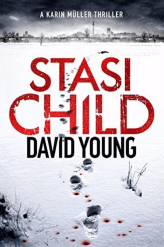
Debut novelist David Young’s first Oberleutnant Karin Muller novel, Stasi Child is out now for Kindle, and here as part of his blog tour, David talks to LifeOfCri.me about a few of those things particularly loved by the East Germans.


imageEast Germany – or more properly, the German Democratic Republic (Deutsche Demokratische Republik in German) – is now a lost world, and many would say that’s for the best, trapped as its citizens were behind the fortified Berlin Wall and the inner German border.

But twenty-five years after the two Germanies reunited (the anniversary was earlier this month), there are still some things from the communist state that its former inhabitants hanker after. It’s spawned a form of nostalgia with its own name – Ostalgie. In my novel Stasi Child there are plenty of references to products and brands which were peculiarly East German. Some were so popular they still survive today.

Cars

My detective, Oberleutnant Karin Müller, and her deputy, Unterleutnant Werner Tilsner, drive around in an unmarked police Wartburg. But the most iconic East German car was the much-maligned Trabant. The Trabi can still occasionally be seen on the streets in eastern Germany today, even though it was made out of a strange product called Duroplast – a mixture of recycled cotton and resin. It had a horribly inefficient two-stroke engine, a top speed of 62 mph, and emitted between five to nine times the pollution levels of even an average 2007-vintage western European car. Nevertheless, they were much sought after, with citizens often on a years-long waiting list, so lucky owners maintained them meticulously. Wartburgs – a step up from the Trabi – were made of steel, and were even exported to the UK. Müller and Tilsner in Stasi Child would probably have driven a Wartburg 353 – nicknamed ‘Farty Hans’ because, like the Trabant, it was a two-stroke with copious exhaust emissions.

Food

In the original draft of Stasi Child, I had Müller eating a Ketwurst – a ketchup wurst (the German name for sausage) bought from an outdoor stand. The Ketwurst was an East German ‘invention’ – developed by the fantastically-titled State Gastronomic Research Centre – to rival the American hot dog. Then I discovered it didn’t come into being until 1977 or ’78, while the novel is set in 74/75. So instead she wards off her hunger with a quarter Broiler. The broiler was simply grilled or fried chicken and an East German fast food staple.

Other famous East German food products include the ones listed by my teenage characters in the second, parallel narrative of Stasi Child. For example, Nudossi (sometimes nicknamed Ost-Nutella) – a hazelnut and chocolate spread which actually has a higher proportion of hazelnuts than its western equivalent and is still produced today (it’s delicious!). Another is Spreewald pickles – pickled gherkins in glass jars produced in a wooded area 100 kms south-east of Berlin, which famously feature in the film Good Bye Lenin! Then there was the GDR’s answer to Coca Cola: Vita Cola, advertised as a ‘carbonated soft drink with fruit and herb flavoring’ and like its more famous western cousin, produced according to a ‘secret recipe’.

There are still restaurants in the eastern part of Germany where you can sample traditional East German dishes. One of them – the restaurant attached to the DDR-museum in Mitte – serves the favourite dish of Müller’s husband, Gottfried, Gebackene Apfelringe (baked apple rings). This features in a particularly harrowing scene in the novel.

Alcoholic Drink

Drinking alcohol was almost a national pastime in East Germany. The GDR’s official youth movement, the FDJ, even had a song about drinking beer. In the mid 1970s – when Stasi Child is set – an East German medical specialist estimated that 5% of adults in the GDR were alcoholics: four times as many as in West Germany. In my opening scene, Müller and Tilsner wake (in Tilsner’s marital bed!) with hangovers after downing too much Blue Strangler the night before. Blue Strangler in the early days of the GDR referred to 40% proof crystal vodka, and got its nickname from the blue label of the bottles (a later version actually branded as Blue Strangler was actually a grain schnapps of lower alcohol content). Although former East German detectives I spoke to insisted there was no drinking on duty or during a case, alcohol was part of daily life. East German women’s magazines even advised a special diet for those wanting to lose weight: the wurst and vodka diet!

Interestingly, when the 1989 protests which led to the dismantling of the Berlin Wall and East Germany began, alcohol consumption slumped to historic lows within a matter of weeks.


Stasi Child by David Young is out now in ebook. The Paperback will follow in February 2016.

Posted in Blogging

Twelve words.

There was a time in the late nineties / early noughties when I spent all my spare time entering competitions, and I was good at it.  My list of wins is long, adventure packed and value wise topped £50k in the years I was active.  During this time my preferred competitions were those where I needed to complete a sentence or phrase in a limited number of words.  The other day I was reminiscing over these days and it gave me an idea for a new feature, a spin on the usual Q&A the plan is to ask authors a handful of questions, but they could only answer in maximum of 12 words.

I spoke with a few author friends who all seemed up for the challenge, so once I get round to writing and sending out a few questions, get ready for a new series, it could be fun….