London at the dawn of 1918 and Ireland’s most famous literary figure, WB Yeats, is immersed in supernatural investigations at his Bloomsbury rooms.
Haunted by the restless spirit of an Irish girl whose body is mysteriously washed ashore in a coffin, Yeats undertakes a perilous journey back to Ireland with his apprentice ghost-catcher Charles Adams to piece together the killer’s identity.
Surrounded by spies, occultists and Irish rebels, the two are led on a gripping journey along Ireland’s wild Atlantic coast, through the ruins of its abandoned estates, and into its darkest, most haunted corners.
Falling under the spell of dark forces, Yeats and his ghost-catcher come dangerously close to crossing the invisible line that divides the living from the dead.
Poets, politics, the paranormal, this book has it all.
After the success of his first novel Disappeared, Anthony Quinn returns to Ireland with new title The Blood Dimmed Tide, only this time it is to an Ireland heading towards the end of the First World War, when the country is striving for separation from Britain, the Anglo-Irish aristocrats are abandoning their great homes to flee to England, and Irish prisoners destined for execution are instead being returned to their home.
As someone who doesn’t usually read historical crime, and given the alternative first/third person narrative of the story I felt it took me a little longer to become gripped by the story than I am used too, but once I was hooked I was hooked. With its myriad themes and characters there is something in here for everyone.
I also enjoyed the setting and felt that the Ireland envisioned in the tale is almost a character in itself. Quinn is adept at creating haunting and atmospheric visions of Ireland at this time, which I felt really enhanced the supernatural feel and mysteriousness of the tale.
The Blood Dimmed Tide has been billed as the first in a series of three historical novels set around WW1 and The War of Independence, and it has certainly sparked an interest in me around this period in history, so I’ll be looking out for more from Mr Quinn.
Reykjavik in November is dark. That’s probably the first thing you notice. I’m used to getting up before it’s properly light, but usually the dawn starts to spread as I take the dogs out, check the livestock and get my breakfast. Here the blackness is total as the alarm goes off, still pitch over coffee and bacon, and treacherous on the walk from Hotel Holt to the Nordic House across a bog of noisy ducks and sulphurous smells.
And yet somehow I don’t mind. I’m here for the second Iceland Noir, the newest kid on the crime fiction festival block and fast becoming one of my favourites. The festival has grown, now filling two days with panels and signings rather than just one. It’s still organised by the tireless Quentin Bates, Ragnar Jónasson and Yrsa Sigurðardóttir, aided this year by Lilja Sigurðardóttir. And what a great show they put on for us.
As might be expected from a crime fiction festival set in Iceland, the influence of Nordic writers and writing featured in many panels. Topics included Nordic Influences, Works in Translation and my favourite (perhaps biased here) Is Scotland Nordic? (answer – no). All the panels were well attended and the discussions lively. I would liked to have attended them all – something that would have been possible as they are run one after the other and with enough time in between to have a quick coffee (and pop outside for that rare glimpse of daylight). Alas, technology had other ideas and I missed several re-recording a lunchtime interview after the German journalist’s mini disc recorder decided it didn’t like what I was saying.Photo by murderiseverywhere.blogspot.co.uk
Perhaps the best thing about Iceland Noir though is not the panels but the time between them, when everyone mingles outside the hall, chatting about books, Reykjavik, the endless darkness and a hundred hundred other things. English is the default language, which I find rather humbling. Plenty of Brits make the journey over the North Atlantic – this year’s UK writers included (in no particular order) Peter James, Zoe Sharp, Michael Ridpath, David Hewson, Craig Robertson, Louise Millar, Sarah Ward, Mari Hannah, Susan Moody, and William Ryan – but there was notable home grown talent from Ragnar and the two Sigurðardóttirs, Solveig Palsdottir, Viktor Arnor Ingolfsson and many more whose names stretch my ability to find strange letters on the keyboard. This year saw Swedish author Johan Theorin make the journey, along with Finland’s Antti Tuomainen and Norway’s Vidar Sundstol, and ex-pat American David Swatling came over from Amsterdam with his fascinating tale Calvin’s Head. Truly Iceland is a meeting place of nations.
In addition to the panels, there were a couple of crime writing workshops hosted by William Ryan, and a Reykjavik Crimewalk, guided by Úlfhildur Dagsdóttir, which sadly I missed but everyone seemed to enjoy. Saturday evening everyone piled into an exclusive restaurant housed in an old theatre building for the festival dinner, topped off by a topical crime quiz in which, inevitably, the winning team cheated. It was all very good-natured though, as seems to be the way when a bunch of crime fiction authors and readers get together.
And so the festival closed. Or at least it would have done had not Yrsa Sigurðardóttir organised a coach trip on the Sunday, out to the Snaesfellnes peninsula to visit the places that had inspired her novel ‘My Soul to Take’. The weather (and light) seemed against us as we set off, but magically the clouds rose and the sun came out as we reached the village of Arnastapi. A quick leg-stretch and cliff-top walk, then on to Hellnar. The cloud was still too low to see the glacier, so instead we were taken to a series of volcanic caves straight out of Jules Verne’s epic Journey to the Centre of the Earth. If only we could have come out at Stromboli and not into a chilly arctic wind.
Iceland Noir has grown from its initial start last year, but retains its cosiness and relaxed atmosphere. Sadly it won’t be on in 2015, relinquishing its date in an ever more filled calendar for Shetland Noir. It will be back in 2016 though, and so will I. Even in the darkness Iceland is still a wonderful place.
Grandmother Ruth Sutton writes to the man she hates more than anyone else on the planet: the man who she believes killed her daughter Lizzie in a brutal attack four years earlier. Ruth’s burden of grief and hatred, has only grown heavier with the passing of time, her avid desire for vengeance ever stronger. In writing to him Ruth hopes to exorcise the corrosive emotions that are destroying her life, to find the truth and with it release and a way forward. Whether she can ever truly forgive him is another matter – but the letters are her last, best hope.
Letters To My Daughter’s Killer exposes the aftermath of violent crime for an ordinary family and explores fundamental questions of crime and punishment. How do we deal with the very human desire for revenge? If we get justice does reconciliation follow? Can we really forgive those who do us the gravest wrong? Could you?
I’m a big fan of books written in letter / diary format as I find they are usually far more emotionally charged and are an enjoyable and easier way in which to connect with a character.
Letters To My Daughters Killer ticks all those boxes for me, in fact I actually sat and read it in just one sitting because there was absolutely no way I was putting this book down once I had started. The rawness of the emotions involved leaps from the page, and you can’t help but feel every shred of anger, rage, hurt and disappointment that Ruth is feeling.
Beginning four years after the murder of her daughter Lizzie, it follows the events immediately after her death, the police investigation and the arrest and trial of her murderer. The trial scenes are some of the best I’ve read, coming across as true to life of real court cases, and as the killer’s legal team spin their case you will feel as uncertain as Ruth as to whether or not the culprit will pay for his crime.
If you are looking for something different from your usual police procedural, psychological thriller, or race against time novel, you will not go wrong in choosing Letters To My Daughters Killer.
Anthony Quinn, author of critically acclaimed debut novel Disappeared, returns with his new novel, The Blood-Dimmed Tide, the first in a series of three historical novels set in Ireland during WWI and the War of Independence. Here he talks to LifeOfCri.me about the nuances of using fact to create fiction.
I’m very much a believer in writing first and researching later. The danger of writing historical fiction is that as a writer you run the risk of disappearing down a wormhole into another era, never making it back with a clear-cut, compelling tale to relate. I’ve been obsessed with WB Yeats and the Sligo setting for years, and in writing The Blood Dimmed Tide the temptation was to succumb to excess and include a rich tapestry of historical minutia.
However, writing historical fiction, especially a mystery story, should be like steering a boat with a leak in high seas. Many loved items have to be chucked overboard with every page you write. Amusing anecdotes and fascinating details that don’t animate your principal characters and move the plot along have to be discarded with impunity.
For this reason, I resorted to thumbing through Yeats’ biographies only when there was a gap in the plot that desperately needed filling, or a scene that required fleshing out with something concrete. That sense of urgency which comes with keeping the literary boat from capsizing at all costs is a protection against procrastination and getting lost in the past.
Another great challenge in writing The Blood Dimmed Tide was remaining faithful to the historical record of Yeats and his life-long muse Maud Gonne. I was uneasy with the idea that I was possibly doing them a great disservice by entangling them in a plot involving occult societies, spies, smugglers and corrupt policemen.
However, Yeats has been much derided for his ‘creepy’ obsession with the supernatural, and his interest in the magical powers that might be acquired through esoteric knowledge has alarmed many literary critics over the years. It eased my conscience to think that I was at least portraying this side of his character sympathetically. This was what I promised WB Yeats at the start of writing The Blood Dimmed Tide. Whether or not I delivered is another matter.
I hope I am saved by the fact that many of Yeats’ friends found him unknowable. Irish writer Sean O’Faolain famously said of him: “There was no Yeats. I watched him invent himself.” In that sense, he is impossible to capture within the covers of a biography, which is a great problem for his biographers, but a golden opportunity for a novelist.
Yeats will always remain an enigma. He was one of a group of extraordinary and mesmerising figures that made London at the turn of the century an emporium of exotic cults and psychic societies. He was the closest thing we have to a supernatural sleuth, always seeking answers, always probing the evidence before him, always odd and unpredictable in his behaviour – which I hope makes him the perfect hero for a mystery story, especially one that involves ghosts, spies, smugglers and corrupt policemen.
As Crime writing courses go, you can’t get much more successful than Crime and Publishment, in the two years it’s been running it has seen two of its attendees awarded publishing contracts.
March 6th – 8th 2015, sees it return for its third successive year and features lessons from some great authors including Caro Ramsay, RC Bridgestock & Tom Cain.
You’ll also get a chance to pitch your novel to an agent and you never know you may just be the next successful attendee.
For those aspiring writers amongst you there’s a new kid on the block when it comes to creative writing events specifically aimed at writing Crime Fiction.
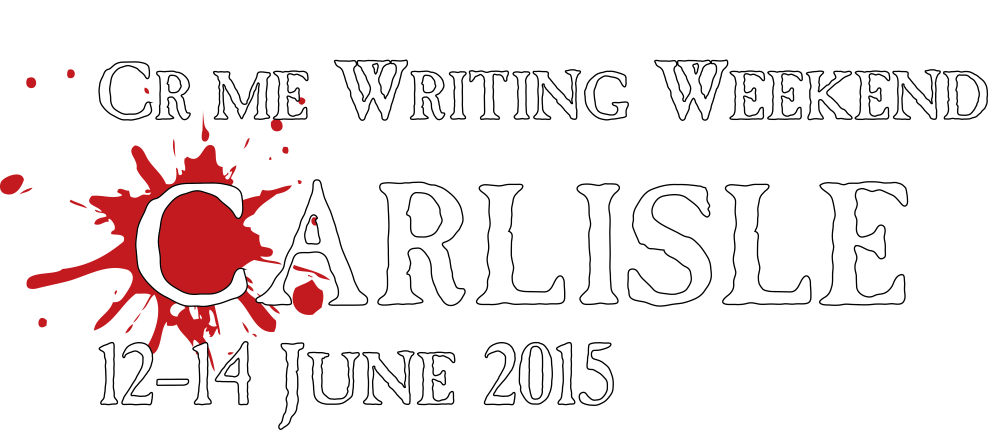
Recently launched, The City of Carlisle are holding their first ever crime writing weekend during June next year. Over thirty top crime writers will be hosting events at The Old Fire Station, the city’s new arts centre, due to open in spring 2015.
So far there are fourteen events planned over the course of the three day weekend including
Cumbria – Cosy or Criminal?
Northern Noir
Historical Crime
The Murder Squad
Femmes Fatales
Get Forensics Down Here!
Female Detectives
Talking Sherlock
Dramatising Sherlock
Fact vs Fiction
Tartan Noir
Further details of the weekend, events, participating authors and help with accommodation if you fancy staying locally can all be found at crimeweekend.carlisle.city Tickets to events are due to go on sale at the end of November.
As part of the blog tour for her new thriller Vendetta, Dreda Say Mitchell talks to LifeOfCri.me about the art of thriller writing.
I’ve worn a number of hats in my career and one of them has been teaching. In the classroom, one of the favourite catchphrases (after folding your arms) is “Now children – what have we learned today?” Another hat I wear is as a journalist and we’re all familiar with the top 5 tips or lessons feature. Meanwhile, in my work as an author, I’ve shifted direction with my new thriller ‘Vendetta’. What better way to prove that I can multi-task than by compiling a top 5 lessons I’ve learned from writing thrillers?
1. Characters
Characterisation is an important building block of any kind of fiction but in thrillers it’s an essential feature. Thriller readers tend to read a lot of books and they’ve got an eagle eye for cardboard cut outs and stereotypes. Heroes and villains may (or may not) be exaggerated versions of people you meet in everyday life but they still need to be grounded in reality. The question to pose is not, would a character behave in a certain way – but could they? In ‘Vendetta’, our hero Mac might go well beyond the bounds set by his job and personality – but is he a believable person?
2. Plot
A well-crafted thriller plot is rather like a Swiss watch and fits together like a jigsaw puzzle. It needs to be compelling enough to keep the reader hooked and provide them with evidence to work with, while at the same not cheating by dodging the rules of the genre. This is a very difficult trick to pull off. In ‘Vendetta’, Mac’s lover has been murdered and he has to find out by whom and why. The reader has to be there to help and work it out along with him but to share his shocks and surprises.
3. Pace
Literary writers are allowed to spend ten pages describing a situation in which nothing in particular happens or theorising about the human condition but that doesn’t work in thrillers. The reader expects the author to get a move on. One classic method of doing this is to give your hero a set time limit to solve his case before it’s too late. In ‘Vendetta’, Mac’s got less than a day. The clock is ticking.
4. Series
A thriller doesn’t need to be part of a series to be effective, but as the saying goes, it helps. Once a reader decides a character is working for them, they like to learn more about them and see how they operate in different circumstances. I decided a series was how I wanted to write but I wasn’t interested in the lone hero model. In addition to Mac, there are two other main characters, Rio and Calum along with lesser characters. In the next book, ‘Death Trap’ I turn my attention to Rio as the main protagonist and in the novel to follow that, it’s Calum. When I decide some of minor characters have legs, there’ll be reappearing too.
5. The X Factor
We’re probably all familiar with people we know who seem to have it all. The ideal spouse and family, the great job, the interesting life – and yet it doesn’t seem to work for them and they’re booked with counsellors on a regular basis. Thrillers can be rather like that. Compelling characters, plot, lean, taut and effective writing, all of which leads up to that classic showdown in the final chapter. Yet it doesn’t fly, your attention wanders and it becomes one of those books you leave lying around, always meaning to finish. The frustrating thing for writers and readers alike is that no really knows why this is. I’m hoping that ‘Vendetta’ has the X Factor
VENDETTA by Dreda Say Mitchell is out now in paperback and eBook, published by Hodder, £6.99. For more information visit www.dredasaymitchell.com and follow Dreda on twitter @DredaMitchell
‘A shot rang out’ is four words, but it packs a hell of a punch. Flash fiction is the art of surprise, illumination, punch.
Think short fuse, short-arm, Get Shorty. Did you know ‘flash in the pan’ originated with the priming of guns? And flashnotes are counterfeit notes… We could go on, but we won’t, because we’re big on brevity. Surprise us. Burn us. Write us. Whatever you do, do it in a flash.
Bang bang, you’re read.
It costs just £2 per entry and the first prize is a PAIR (yes a pair) of weekend passes to CrimeFest 2016(access to all interviews, panels and receptions, exc. accommodation, dinner, travel) with runner up prizes of a single weekend pass to CrimeFest 2016, followed by a CrimeFest goodie bag. On top of all that, those on the shortlist will be invited to attend the Crime Writing Day on Friday 15 May 2015, when the winners will be announced.
Think you’re up for it? Why not give it a go, after all 150 words…… how hard can it be? 😉
Full details of prizes and how to enter can be found here
Yes it’s that time of year again. The Crime Writers Association2015 Debut Dagger competition opened on the first of the month and runs through until Midnight on January 31st 2015. Not sure what to do with your NaNoWriMo manuscript when you’re done? Well now you’ve got another eight weeks to polish it up, send off your synopsis, and you never know….
For 15 years the CWA has been encouraging new writing with its Debut Dagger competition for unpublished writers. The submissions are judged by a panel of top crime editors and agents, and the short listed entries are sent to publishers and agents.
The Debut Dagger is open to anyone who has not yet had a novel published commercially. All shortlisted entrants will receive a professional assessment of their entries. Winning the Debut Dagger doesn’t guarantee you’ll get published. But it does mean your work will be seen leading agents and top editors, who have signed up over two dozen winners and shortlisted Debut Dagger competitors.
But entering the Debut Dagger is more than just entering a competition. You can also join our community, via the Facebook Group giving you the opportunity to ask questions, share your experiences and helping out your fellow writers.
Entry to the competition costs £25 and submissions can be made here
Manuscripts should be 12pt, double spaced, in an easily readable font such as Times, Arial or Helvetica. They must fall within the prescribed word limits. Manuscripts must not include the author’s name or contact details, only the title of the work which will be allocated a unique CWA reference number.
Full Terms & Conditions of entry can be found here. Good Luck to all of you who enter!
Two murders. Two different crime scenes. One killer?
Mac wakes in an smashed-up hotel room with no recollection of what has happened. With his lover’s corpse in the bathroom and the evidence suggesting that he killed her, Mac is on a mission to uncover the truth and find the real killer.
But he’s in a race against time with less than a day to unravel the mystery. Still reeling from a personal tragedy Mac isn’t afraid of pain. Hot on his heels is tenacious Detective Inspector Rio Wray. Double-crossed and in the line of fire, Mac has to swim through a sea of lies to get to the truth.
But only Mac knows he’s been living a double life. Can he be sure he doesn’t have the blood of a dead woman on his hands?
In a big change in direction from her usual London gangland novels Vendetta is a race against time thriller and it’s a gripping one at that. The hook is there immediately as Vendetta has one of the best openings I have read in some time, and you really get a feel for the pain, grogginess and sense of confusion that Mac is going through as he struggles to come to and work out where he is.
From there on in the action and the questions come thick and fast, as Mac has less than a day to discover the truth behind who killed his girlfriend and why. As both sides of his double life are revealed, more and more conspirators are added to the mix, the plot thickens, the tension increases and your ability to put the book down will disappear.
It’s a cracking read with genuinely believable characters from troubled Mac, to feisty DI Rio Wray and to those he works for on both sides of his life. There’s plenty of legs in these guys too so I’m looking forward to hearing more…
Vendetta is out today. Click on the image above to get your copy.










 Life of Cri.me